

A Weary Evangelical Finds Rest in the Prayer Book
How does a broadly Reformed evangelical—formed in Wesleyan revivalism, shaped by the Reformers, deeply skeptical of institutions—find himself walking the Anglican way without discarding lessons learned through formation and service in other churches? How does one move from a faith driven by emotional intensity and ministerial performance to the quiet, steady rhythms of the Prayer Book and healing in the ordinary means of grace?
Many evangelicals wrestle with these questions. So did I.
Sponsored
By most counts, I am still a rookie Anglican, having been confirmed less than two years ago. But as I trace the movements of the Good Shepherd’s staff over my eighteen years of following Christ, what stands out is that my becoming Anglican was not a sharp turn—the Lord slowly, subtly, yet unmistakably dropped markers along the path that led me here. Becoming Anglican felt less like an abrupt shift and more like arriving at a long-prepared landing spot.
Becoming Anglican has not extinguished my evangelical fire; rather, it has sharpened those convictions while anchoring me in the ancient catholicity that knits us together with saints across the ages. More than anything, the Anglican way offered a sanctuary of rest and healing after a season of burnout—a long spiritual winter when my zeal and service outran my spiritual formation and maturity. It became the place where I could shed old, exhausting assumptions about worship and service, let the Holy Spirit bind up my wounds, and learn the power of quiet transformation through the Book of Common Prayer and the means of grace.
Early Seeds: Conversion and Growth
I had a dramatic conversion when I was nineteen years old. Amidst personal crises and immersion in the darkness of heavy metal culture, drugs, and the occult, the Lord in his mercy saved and transformed me during my freshman year of college. I was catechized and baptized in the Church of Christ in Christian Union, a Wesleyan Holiness denomination. That early season of formation was foundational: my pastor taught me to earnestly seek God in prayer, read Scripture prayerfully, and strive for holiness of heart and life.
During university, a campus minister taught me the value of covenant community and accountability. I served in music ministry through local churches and the campus Wesley Foundation while remaining connected to the rural churches of my hometown. I drank deeply from many wells and was shaped by the works of Tim Keller, Oswald Chambers, R.C. Sproul, A.W. Tozer, and C.S. Lewis. My undergraduate studies also exposed me to Foxe’s Book of Martyrs, the English Reformation, and the Puritans. Whether I realized it or not, a seed was planted: an aching desire for historic depth that eventually led me to the Anglican way.
Service, Exhaustion, and the Wall of Burnout
After finishing college and relocating, I found a new church home. For nearly a decade, I quietly served as a volunteer musician and in creative ministry at a rapidly growing evangelical church plant. If you’ve served long-term in ministry, especially as a volunteer, you know how faithfulness amid organizational shifts shapes your character. But you also know how easily volunteer service can shift from a joyful offering to an unspoken expectation, where exiting the orbit feels almost impossible.
After years of relentless production Sunday after Sunday, I hit a wall: burnout. Against my conscience’s quiet warnings, I justified staying despite growing disagreements with the church’s shifting identity and pragmatic methodology.
I remain deeply grateful for every church I have worshiped and served in—from the rural holiness churches to the large contemporary spaces. God has used all of them to shape me. But over time, the bones of my soul cried out for deeper wells. For most of my Christian life, I had been taught that truly loving the Church meant throwing yourself into activity and service; merely attending was dismissed as being a passive “churchgoer”. To prove your devotion, you became “broken bread” for others, regardless of the personal cost. What I failed to do was guard my heart. I made the tragic, common mistake of substituting service for the Church for relational intimacy with Christ.
For years I stood at a theological crossroads. I knew there were simpler, deeper, more nourishing ways to live the Christian life, yet felt a duty to “stay and fight” where my children had been dedicated and where I had poured out so much energy. But that road ran out.
The Spiritual Winter and the Scrupulous Mind
Stepping back from ministry coincided with the COVID-19 pandemic in early 2020. My wife and I knew it was time to move on, but we had no idea where to go. Between raising a newborn and a toddler and navigating remote work, job changes, and graduate school, the search for a new church halted.
During this isolation, my devotional and prayer life floundered. I had a long struggle with scrupulosity that now reached fever pitch. My sensitive conscience, stung by struggles and not being part of a local church, made every look inward a nightmare. My tendency to examine myself kicked into overdrive. Opening the Scriptures felt perilous, as if I would find only fresh indictments of my failures as a husband, father, and Christian. I found myself trapped in my own mind, exhausted by my struggles, and at the end of myself. However, God still mercifully provided manna in the desert time as a reminder of his covenant faithfulness and abundant mercies.
I eventually resumed my search for a church and found St. Luke’s Anglican Church. While I knew the history of the English Reformation academically, I had no lived experience with a liturgical, sacramental church. I researched Anglican doctrine and practice, and the pieces fell into place: historic continuity with the early Church, a firm commitment to the supreme authority of Holy Scripture, and a warm, evangelical heart. Most of all, it emphasized the care of souls and the necessity of resting in Christ.
Then came the providential twist: a beloved professor from both my undergrad and graduate school experience was the vicar. It felt as though the Lord had placed neon signs pointing to the parish right down the road. We met for coffee, shared several meals, and soon after, my family walked through the doors for Sunday worship.
Rediscovering the Ordinary Means of Grace
Moving from a contemporary evangelical service to a quiet, liturgical parish was significant, but the liturgy’s rhythms wrapped around me like a well-worn coat. In those first services, I experienced profoundly moving, tearful moments during the Prayer of Humble Access and the post-Communion prayers. I learned again the healing power of God’s objective promises, spoken to me from outside myself.
St. Luke’s was small and unpretentious, dedicated to the Gospel and the Prayer Book’s simplicity. It was precisely what my soul needed. After years of feeling like a theological outcast—wishing for evangelical zeal, historic roots, and pastoral warmth in the same room—I finally found a landing place.
Looking back, that season in the wilderness was necessary. God used it to strip away my self-sufficiency and my need to “prove” my spiritual vigor. On the other side of burnout, bruised by scrupulosity, I did not find a taskmaster demanding labor; I found the gentle Savior-King who had saved me, guided my steps, walked alongside me, and invited me to a Table. When my prayers failed, the Church’s prayers carried me. When I couldn’t shake the notion that I had to “feel” something for it to be genuine, the Prayer Book declared that the Spirit’s work is accomplished through God’s Word and ordinary means.
The Hearth and the Fire
As I root myself deeper in the Anglican tradition, I continue to praise God for how He uses those means to sustain our lives. The Book of Common Prayer gives me words when my mind wanders and quiets my conscience with the clear declaration of God’s forgiveness in Christ. The church calendar and collects ground my family in an ancient rhythm, connecting us to a vast cloud of witnesses.
I remain stubbornly evangelical. On the Anglican “spectrum,” I find most kinship with J.C. Ryle, Charles Simeon, John Wesley, and J.I. Packer. I believe the greatest miracle is a heart and life transformed by grace. In my younger years, I wanted that evangelical flame to spread like a wildfire, often burning out the very ground it stood on. Anglicanism taught me that fire belongs in a hearth.
Faithful preaching of the Word, the administration of the Sacraments, and the rhythms of common prayer form that hearth. They do not extinguish the fire of the Spirit; they keep it fed and nurtured, burning safely and steadily to warm the entire house for generations to come.
I am an Anglican because it brought me back to the simplicity of Gospel rest and its restorative power. In the quiet reverence of my tiny parish, I found my home among the faithful both in the pews and through the centuries. I have rediscovered the joy of serving the Church, not to prove myself, but to uplift and edify others by stewarding my gifts. Recently, I was licensed as a lay reader in my parish, following my conviction about the importance of the ministry of the Word.
For me, the Anglican way has provided rest, healing, and restoration—things many people, inside and outside the Church, seek today.

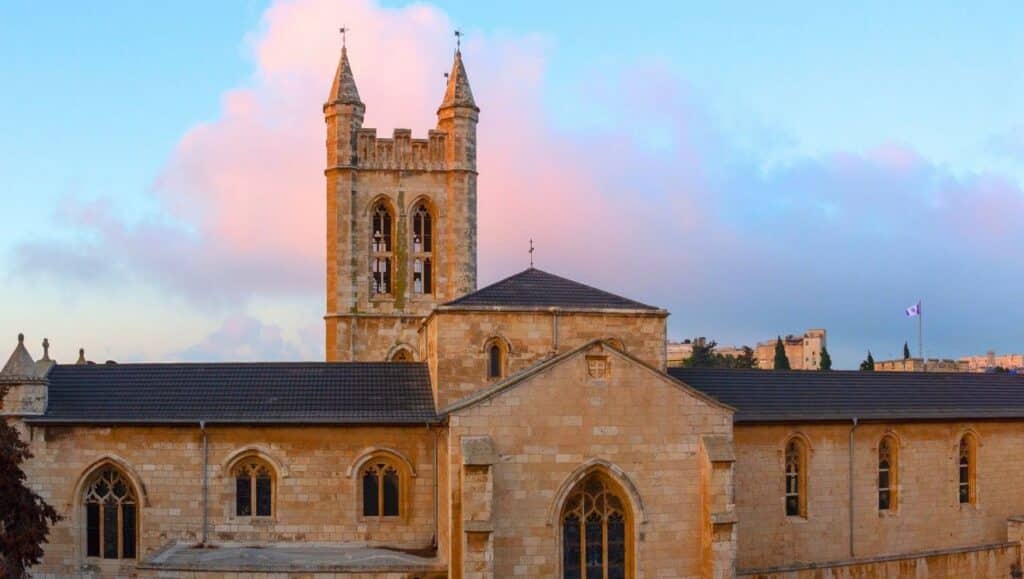
The Standard of Prayer Book Worship (Jerusalem Declaration 6)
We rejoice in our Anglican sacramental and liturgical heritage as an expression of the gospel, and we uphold the 1662 Book of Common Prayer as a true and authoritative standard of worship and prayer, to be translated and locally adapted for each culture.

How to Do Morning Prayer in the ACNA’s 2019 Book of Common Prayer
Where Do I Start? Whether you’re a Rookie Anglican or just “Angli-curious,” perhaps you’ve heard of this new Book of Common Prayer 2019 (BCP 2019) and are asking yourself, “What is this thing?” or “How do I use it?” Learning how to use the BCP is a little like learning to drive a car. It…
