

Book Review: Why We Create: Reflections on the Creator, the Creation, and Creating
Brian Brown and Jane Clark Scharl of the Anselm Society edited a collection of essays entitled Why We Create: Reflections on the Creator, the Creation, and Creating, published by Square Halo Books in the spring of 2023. At under 200 pages, this paperback delivers more proverbial weight than its compact trim size might indicate. In ten essays (plus a prologue and epilogue), contributors explore what it means to dwell in the created order and how to interact with it as sub-creators made in God’s image.
The editors compiled the book in the hopes of serving as an accessible “primer” or “crash course” on the study of creation and creativity (from the introduction, xv). However, it is not intended only for artists. I found it to be primarily about the work of being human on a deeper level, a level where all people find themselves. In fact, in a podcast interview about the book, Brian Brown tells listeners to “set aside the word art entirely” for a moment and consider that every act—from lawmaking to city planning to engineering to housecleaning—if it seeks to draw order out of chaos, is a creative endeavor. A creative God gives us all our personhood, vocation, and meaning. As His image-bearers, we are called to reflect him in every manner of work.
Sponsored
Part One: God Creates
The essays are divided into three parts: God Creates, We Create, and God Meets Us in Creation. The bulk of the content is in the first two parts.
Part One deals with the created order and its relationship to the spiritual. In the first essay, Hans Boersma considers the Allegory of the Cave from Plato’s The Republic and how this created world is meant to point us to a deeper reality—and, ultimately, to God. “Heaven,” he writes, “is not simply a world of better shadows.” Instead, it is “a thing of more dimensions, more reality, and therefore more meaning than the earth we experience today” (p. 7).
Even so, Paul Buckley brings us back down to earth, reminding us that the world is full of God’s glory, revealing the Creator in every exquisite detail. The poetry of the psalms and the revelation of Christ’s incarnation point to a beloved creation “redeemed, not abandoned” (20).
Speaking of dimensions, Jane Scharl’s essay examines time and our limited experience of it. Though we experience the passage of time in a single direction, Scharl invites us to view it as a “broad, dynamic landscape” (p. 44) upon which God moves freely—as do our prayers. Peter Leithart considers how humanity, as a part of God’s created order, visibly manifests our maker.
Part Two: We Create
This leads into Part Two, which handles human creativity. The essays include how gratitude, memory, patience, and language all play a part in our calling to be sub-creators in collaboration with God’s own work. This is the lengthiest and most varied section, making summarizing difficult. Instead, the following are some of my favorite quotations:
“Wise artists, those submitting to God’s ways of work, will view their materials and tools with gratitude. Tools, even simple ones like a well-sharpened Blackwing pencil, are gifts.” (72)
— “Gratitude: The Foundation of Human Creativity” by Leslie Bustard
“Christ reconciles all things to Himself—including the world’s cultural and intellectual heritage…in fact, Christians ought to be the most exuberantly curious and intellectually hospitable people on the face of the earth because all things are ours.” (88)
— “The Art of Memory” by Heidi White
“The Hebrew word translated as ‘subdue’ here [in the Creation Mandate to fill and subdue the earth]…echoes God’s own nurturing rhythms throughout Genesis 1. It affirms humanity’s active participation in God’s work of nesting and enfolding, protecting and cherishing. We, too, can brood in this earth: nurturing it, loving it, ordering it, and seeking its good.” (97)
“We can build homes that serve as puddles of heaven in a broken world.” (Emphasis mine. Isn’t that a wonderfully evocative image?) (102)
— “The Art of Cultivation” by Grace Olmstead
“Before we begin any work of subcreation, we must practice this kind of intelligence, this ‘reading-into’ the world God has made, discovering its Logos there: Jesus. Jesus is the meaning of the cosmos. He is its rationale, its origin, and its destiny.” (125)
— “The Art of Subcreation” by Matthew Clark
“God is active both as audience and as participant in the creation of our art. He is not only viewing what we make; He is giving us all the elements required to make it, and then He is transforming our efforts into something that can actually offer life.” (152)
— “Why We Create: The Eucharistic Life” by Jeromie Rand
Part Three: God Meets Us in Creation
Part Three is an epilogue written by Anthony Esolen. It is a call to arms, of sorts, to Christian creators in the face of secular modernism that would discard the works and wisdom of the past. He implores artists to learn from the hands of predecessors with humility and patience in order to safeguard the artistic heritage entrusted to each new generation. My only criticism of the book is how starkly Esolen draws the line in the sand in this chapter.
Inward Nourishment, Outward Worth
As much as I wanted to devour this book, I simply couldn’t. Its content demanded that I take my time to savor and digest each essay. They are all relatively brief (most are about fifteen pages long) but packed full of delicious insights, nourishing without being overly dense.
True to its original intent, this collection is an excellent springboard to further discussion. Just ask my husband. Over and over, he heard me say, “Ooh! You have to read this one, too!” with each new essay. The ideas begged for us to unpack and discuss them. I also found myself wanting to know about each contributor and the work they do. The back matter provides endnotes with plenty of opportunities to dive deeper into the research behind each essay. It also provides a brief biography of the authors. This led me to discover Jane Scharl’s soulful poetic works and singer/songwriter Matthew Clark’s heartfelt and theologically crafted musical albums (which I immediately added to my playlist). My reading list—already unmanageably long—has several new additions thanks to tantalizing threads I want to pull from the tapestry of Why We Create.
Why We Create is a gem—or rather, a treasure box filled with gems. It is an enriching read for anyone in a creative vocation and well suited for study in a book club or a parish setting. In fact, sharing it in community fits perfectly with the spirit of the Anselm Society, the arts organization from which it was born.
The book is equipping as well as enriching. We live in a time when very big questions are at the forefront of our cultural mind. To name only a few: What is our responsibility over creation? How does our relationship with the creative order matter to our spiritual lives? To eternity? What comprises truly creative work—and can artificial intelligence accomplish it? There are no superficial answers to these questions; Why We Create is an invaluable resource for readers wanting to engage with these questions honestly, intellectually, and faithfully.
Photo by suwanon for Getty Images, courtesy of Canva.
Published on

Book Review: Maiden, Mother and Queen by Roger Greenacre
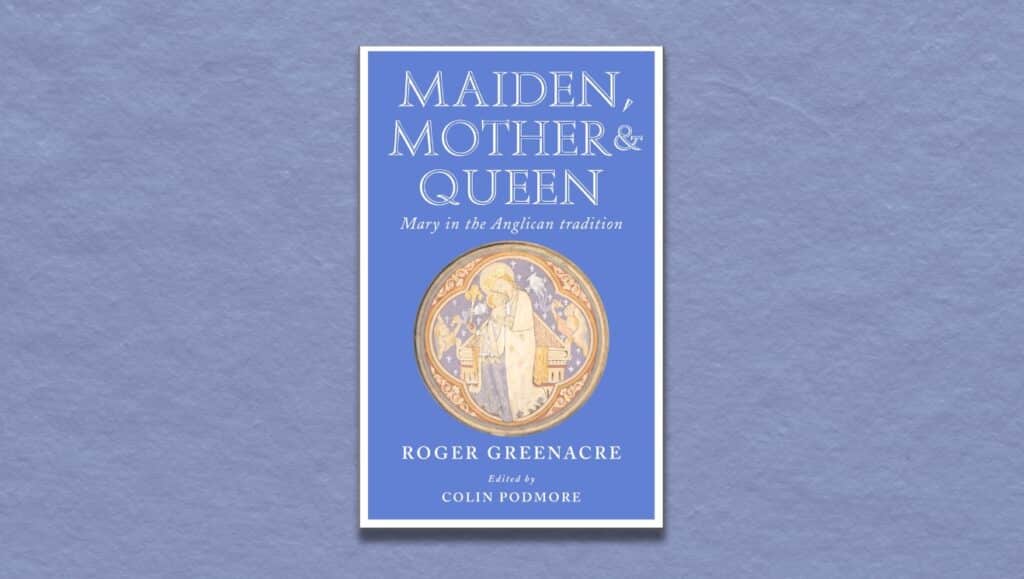
Maiden, Mother, & Queen: Mary in the Anglican Tradition is an editorial compilation of works and homilies by the Rev. Canon Dr. Roger Greenacre (1931–2011), a leading Anglican ecumenist and liturgical scholar.

Book Review: You Have A Calling by Karen Swallow Prior
Karen Swallow Prior. You Have A Calling: Finding Your Vocation in the True, Good, and Beautiful. Grand Rapids, MI: Brazos Press, 2025. 146 pp. If you have grown up in or around the Church, the topic of God’s calling on your life has, at some point, weighed heavily on your mind. Especially in the fervency…
