

Did Jesus Reject the Jewish law?
This article is part of a series on Jesus the Jewish Messiah by Gerald McDermott. Click here to view other articles in this series.
I have not come to abolish but to fulfill (Matthew 5:17).
In his 1526 lectures on Jonah, Martin Luther taught that Jesus attacked Judaism and “abolished the Law through His Holy Spirit and liberated us from the Law and its power.”[1] More recently, megachurch pastor Andy Stanley quoted New Testament scholar Thomas Schreiner, who said that “the entirety of the law has been set aside now that Christ has come.”
Sponsored
Schreiner was saying this was Paul’s view, which we will discuss in a later article. But what about Paul’s rabbi Jesus? Did he reject Jewish law?
Fulfilling the Law
Not according to Matthew’s gospel. In Matthew 5:17, Jesus forbids us from thinking that he came to “abolish the law or the prophets.”[2] The phrase “law and prophets” was Jewish shorthand for what Jews call Tanach, the whole Old Testament. “Law” was a reference to Torah, the first five books of the Old Testament, and “the prophets” was a placeholder for all the rest of the Hebrew Bible.
It is easy to misunderstand the word “law” here when used for the Pentateuch or all the Old Testament. A far better translation of the Hebrew word torah which the Greek nomos (when used thousands of years later) obscures is “teaching” from a wise father telling his children how to have a good and happy life. Nomos in the first century was a medical term for a life-rule or regimen whose purpose was health of mind and body.[3] So “Jewish Law” for Jews has always meant a wise rule of life from a loving Father. Jesus and Paul taught that it could never provide salvation apart from the Messiah, but agreed with the Jewish tradition that Torah is about life and love.
Jesus insisted he was not here to unhitch his followers from Torah or the rest of the Old Testament, but instead to demonstrate and teach their fulfillment: “I have not come to abolish but to fulfill.” The Greek word for “fulfill” here is plērosai, which means “to interpret the passage accurately and to live out the meaning of the text in practice.”[4]
The Commandments
Then Jesus doubled down on his insistence that not one letter of Jewish law would be set aside as long as the heavens and earth remain:
For truly I tell you, until heaven and earth pass away, not one iota [the smallest letter in the Greek alphabet] or one horn [Jewish term for the smallest stroke of the pen in the Hebrew Bible] will pass away from the Law until all things [in it] take place (Matthew 5:18).
Many Christians think Jesus must have meant here only general Old Testament ideas such as love or holiness. But he quickly corrected such a misunderstanding by focusing on the distinctly Jewish concept of mitzvot or commandments:
Therefore if anyone breaks one of the least of these commandments and teaches men likewise, he will be called least in the kingdom of the heavens (Matthew 5:19).
What could Jesus have meant by “the least of these commandments”? Protestant Christians typically have a hard time with this because of their common presumption that all commandments and therefore sins against them are the same weight in God’s eyes. But this fails to appreciate the Jewish context, where rabbis always taught the difference between “heavy” and “light” commandments. Thus a sin against a heavy commandment was a greater sin than one against a light commandment. Jesus showed his Jewishness on this point when he told Pilate that “he who delivered me over into your hands is guilty of a greater sin” (John 19:11).
So what would the least of these commandments be? Here again one must know the Jewish context. The oral tradition in which Jesus and Paul were educated, later written down as the Mishna, taught that the particulars of worship serve the greater aims of life and love.[5] This is why Jesus cited the Law to support his disciples’ gleaning grain on a sabbath when they were famished.
The Significance of Leviticus
Most of the particulars of Jewish worship are in Leviticus, the Old Testament book most Christians think the most dispensable. Yet Jesus probably had Levitical commandments in mind when he spoke of “the least of these commandments.” Lest Christians stumble needlessly here, wondering if gentile Jesus-followers are commanded to keep kosher, for example, the answer is that of Jonathan Edwards: No, Levitical law is not binding in the same way on gentile Christians, but since Jesus says even the least commandment is important, we gentile Jesus-followers should learn at least spiritual lessons from these “least” commandments, such as the need to separate ourselves from the world in the ways we eat. One sign of this is that the early Church told gentile Christians to avoid eating blood and meat from “strangled” animals not killed by compassionate Jewish methods (Acts 15:20).
Jesus hammered his point home even further by praising the person who practices and teaches the least commandments:
He who practices and teaches [these least commandments], he will be called great in the kingdom of the heavens (Matthew 5:19).
Perhaps, we might infer, this includes those Christians who take the Old Testament so seriously that they try to learn from the book of Leviticus, which the rabbis taught young Jewish boys first and said was the most important book in all the Hebrew Bible. And if the Old Testament was Jesus’ Bible—of which there is no doubt—then perhaps we should particularly study Leviticus to understand our Messiah. If we do, and teach others to do the same, we will receive Jesus’ praise.
Did Jesus reject Jewish law? Or suggest that his followers should “unhitch” themselves from the Old Testament, as Andy Stanley has famously put it?
Quite the opposite. For he himself lifted up the Old Testament as inspired by God (John 17:17) and its commandments, even the least of them, as binding on his followers.
The Old Testament is mysterious in many ways. Its relation to the New Testament is not always easy to understand. But the point we should learn from this is to examine the ways that Jesus and Paul regarded the Old Testament. And among those ways is perhaps the most critical—Jesus’ own insistence that his followers should beware of disregarding the First Testament and its commandments.
Footnotes
[1] Martin Luther, “Lectures on Jonah,” in Lectures on the Minor Prophets II, vol. 19 of Luther’s Works, ed. Hilton Oswald (St. Louis: Concordia, 1963), 3-104.
[2] All of the Scripture translations in this article are mine from the Greek.
[3] See McDermott, “Christian Theology: What Difference Does This Make?” in McDermott, ed., Understanding the Jewish roots of Christianity: Biblical, Theological, & Historical Essays on the Relationship between Christianity & Judaism (Bellingham, WA: Lexham Press, 2023), 219-20.
[4] Brad Young, Meet the Rabbis: Rabbinic Thought and the Teachings of Jesus (Grand Rapids: Baker Academic, 2007), 43.
[5] Plucking grain on the sabbath, for example, is permitted if life is threatened; Mishna Yoma 8.6.
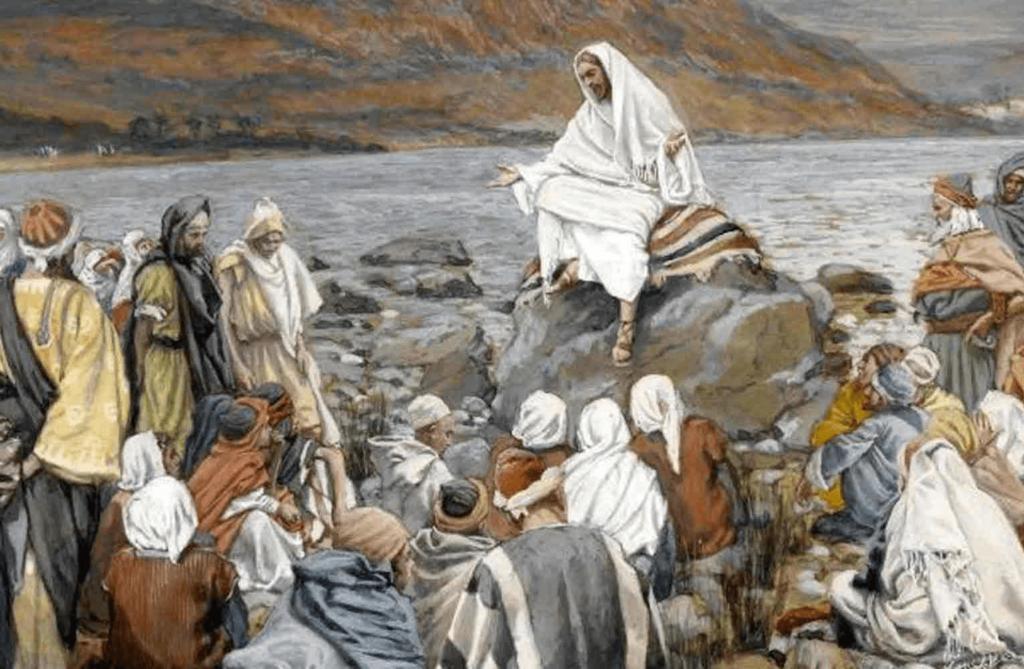
Cover image by James Tissot.
Published on

Jesus and the Jewish Covenant
This article is part of a series on Jesus the Jewish Messiah by Gerald McDermott. Click here to view other articles in this series. Therefore I tell you that the kingdom of God will be taken away from you and will be given to a nation producing the fruit of it. (Matthew 21:43) Did Jesus…

Did Jesus Reject the Temple?
This article is part of a series on Jesus the Jewish Messiah by Gerald McDermott. Click here to view other articles in this series. He who swears by the temple swears by it and by Him who dwells in it. (Matthew 23:21) It has been something of a Christian consensus that Jesus rejected the temple…
