

Do the Work of an Evangelist: An African Perspective (Jerusalem Declaration 9.2)
Editor’s Note: This is the sixteenth in a series of articles by Dr. Stephen Noll, titled “The Jerusalem Declaration: A Personal Commentary.” Dr. Noll draws on decades of experience in the GAFCON movement, especially his role as Secretary of the Statement group that drafted the Jerusalem Declaration and its accompanying Statement.
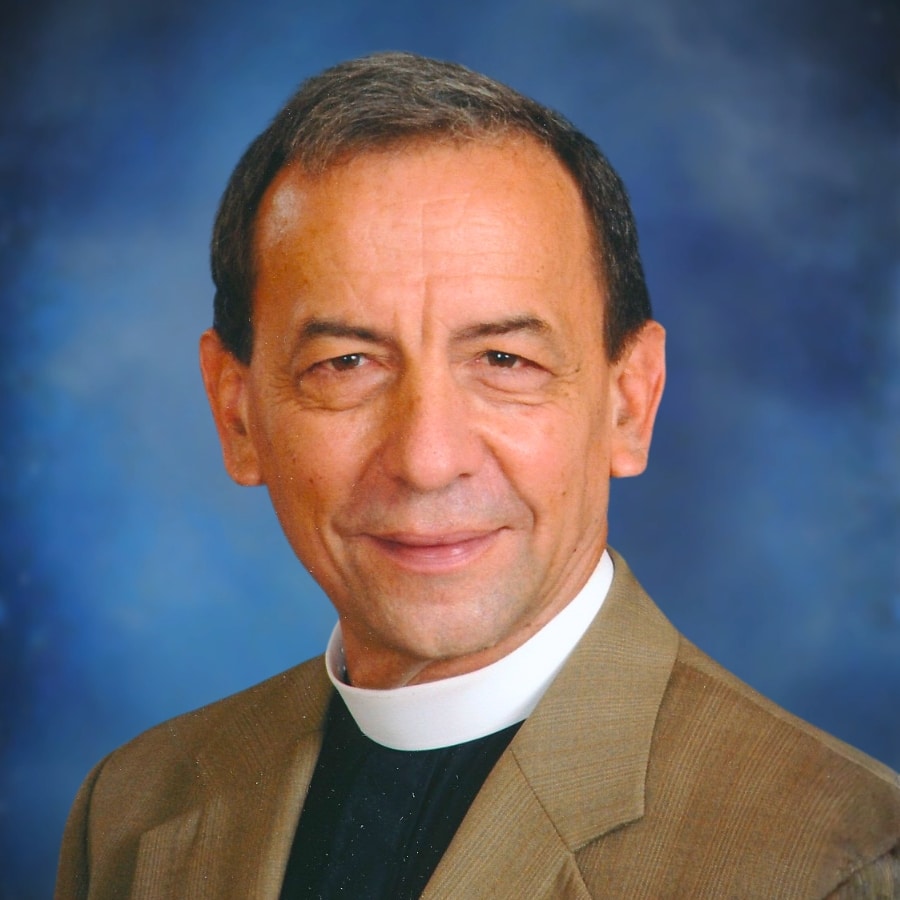
I am including here, as a supplement to this commentary, an interview with the Rev. Canon Dr. John Senyonyi, my friend, colleague, and successor as Vice Chancellor of Uganda Christian University, on the outworking of the Jerusalem Declaration clause 9.

Sponsored
This clause states:
We gladly accept the Great Commission of the risen Lord to make disciples of all nations, to seek those who do not know Christ and to baptise, teach and bring new believers to maturity.
Jerusalem Declaration, Clause 9
John and his wife Ruth co-read the Conference Statement at GAFCON II in Nairobi, which focused on the East African Revival. He also served on the Statement group at GAFCON III and IV in Jerusalem and Kigali.
The expansion of the Gospel in Africa over the past century and a half is largely the fruit of the bold, persistent, and often sacrificial preaching calling for conversion to Christ. While I recognize that “doing the work of an Evangelist” may look different in different cultural settings, there is always the need for the church to equip the church by identifying gifted evangelists and for each Christian to be “prepared to make a defense to anyone who asks you for a reason for the hope that is in you” (Eph 4:11; 1 Peter 3:15).
Interview with John Senyonyi
Dr. Senyonyi’s Story
- Did you have a call to be an evangelist? How has it sustained you?
JS: Though raised in the Church of Uganda, in 1976 I was convicted of my sin and came to Christ as a young student at the University of Nairobi.
I became involved in door-to-door evangelism amongst my fellow students. Soon, not only did I become keenly interested in leading other students to Christ, but I found myself deeply drawn toward ordained ministry. The following year, while attending a church service, the pastor challenged us to commit to the Great Commission of Jesus Christ to make disciples.
After graduation, I continued pursuing the academic career in mathematics I had trained for, but the sense of call to ministry never left me. In 1987, this conviction became overwhelming, and I shared it with my wife Ruth. Although she initially did not welcome it, God revealed to her that he was calling me to resign my University post to go into ministry.
On Martyr’s Day (June 3) in 1987, Bishop Festo Kivengere made me a most unexpected and unsolicited invitation to join his evangelistic ministry, African Evangelistic Enterprise (AEE). I began my work at AEE on January 01 1988, and hence exchanged the opportunity of both prestige and the promise of a thriving future for what appeared to be an underpaid ministry position.
Moreover, I have always had a passion for reaching young people for Christ. I headed a ministry to youth from 1996 to 2000, which hosted annual conferences of thousands of youth, equipping them with Bible-based moral teaching and challenging them to commit to Christ. At the turn of the millennium, this ministry organized the National Millennium Thanksgiving overnight service at the Mandela National Soccer Stadium. I co-emceed the event with a cabinet minister. That same year I accepted the call to be chaplain at Uganda Christian University, which gave me the opportunity to preach and evangelize thousands of students. Even when I moved into administration and later became Vice Chancellor, I continued to pursue my call to do the work of an evangelist.
Every Christian’s Testimony
- What is the role of “testimony” in spreading the Gospel?
JS: In the tradition of the East African Revival, every Christian’s testimony is the least they can do to witness to the Lord’s goodness. In the work of evangelism, a testimony serves to tell listeners, “See what the Lord has done in my life. He can do it for you also.” Whereas each journey to Christ may have different origins and take varied paths, a testimony relates to and grounds the evangelist in the reality of his listeners.
Giving one’s testimony may be shorter or longer depending on the context. Some services in rural parishes go on for several hours, whereas in urban settings with multiple services, time is more limited. In either case, the hearers need the Lord, and I have often used my testimony of coming to Christ and walking with Christ in a 25-minute sermon and then invited people to Christ with no less effect.
- How do you address different audiences, e.g., university students and rural folk?
JS: An evangelist, like any preacher, must be contextual in the message. Therefore, he must be firmly rooted in God’s Word on the one hand and informed about the lives and challenges facing a particular audience. The evangelist follows Karl Barth’s famous dictum to hold the Bible in one hand and the newspaper in the other. Without compromising the message of the Bible, the evangelist illustrates the message from the real life of the hearers so that they see their pitiable state without Christ and the relevance of the Gospel to their life and situation.
I preach in English to my university students and in Luganda to rural congregations. Sometimes I become a two-way translator for Anglo or for vernacular preachers. What is important is that the word goes out and does not return empty.
Committing to Christ
- How do you call people to make a commitment to Christ?
JS: The evangelist’s work is to lift up Jesus. “We preach Christ crucified” (1 Corinthians 1.23). The message itself needs to be God speaking his word, opening the Bible to our hearers, not my opinions. It is God’s message, not our message.
I have used various ways of inviting people to make a commitment to Christ depending on the context and what is familiar to them. But I do not invite people who merely want to be saved; rather, I invite people willing to be saved and prepared to come forward and testify to their commitment.
Commonly, I invite everyone to a time of prayer with soft music in the background, and ask anyone willing to pray a prayer of commitment to Christ from where they are. This is normally followed with my own prayer for any who have prayed, asking that God will help them to confess publicly what they have believed privately. In the end, I invite all who have prayed to commit to Christ to walk publicly to the front. A public confession is essential and affirming to the new believer.
I avoid carrying my engagement with new converts beyond inviting them to join a fellowship group or introducing them to the local minister. The nature of ministry of an evangelist is generally itinerant. It is better they find a home among their own people, to be nurtured into disciples, as Jesus told those changed by him to go as a testimony to their friends and neighbors.
Reaching the Lapsed and Lost
- How do you deal with “lapsed” Christians who have made one or more commitments to Christ?
JS: In the East African Revival, the brethren have attempted to visit, walk in the light, and try to bring back a lapsed or fallen Christian. They also have a group called Noonya Baganda Bange (literally, I’m searching for my brother/sister), which is very active and is funded from the Revival kitty to seek out those who may have lapsed.
The situation is markedly different in urban church life, where understaffing of churches coupled with the challenges of a very mobile population do not allow for close monitoring of Christians. The minister then focuses ministry on the existing congregation. Increasingly, churches are establishing the Cell Group system who meet on a weekly basis for Bible study and fellowship. Then Cell members help to track any lapsed Christian.
- Have you had experience evangelizing Muslims?
JS: Evangelical Christians preach Jesus Christ as the sole Saviour of the world. This compels us to share the Gospel with all, irrespective of their religious convictions. Often the greatest hindrance lies in fear, not knowing how to begin. This is one context where the testimony of the believer comes in handy with an invitation to trust the Lord Jesus Christ.
I have indeed had the experience of evangelising Muslims, and some have responded by turning to Christ. It is always useful to enter the life and beliefs of Muslims in order to present the Christian gospel for what it is: truly Good News. Topics like the love of God expressed in Jesus Christ, the One sacrifice for sin for all people for all time, can be presented without provoking contention. Muslims know that beyond their demand for submission, it is difficult to defend their tenets rationally.
Evangelism in Africa
- How is evangelism different in Africa and the West?
JS: The one major difference is in the social dynamics—individualism versus communal consciousness. Whereas in Africa we still maintain some social cohesion that allows for discussing personal religious convictions, in the West religion is largely privatised and increasingly a taboo subject. In Africa, faith in God is generally assumed; you may even hear the irreligious call upon God.
Many in the West have a sense of economic self-sufficiency, which leads them into false contentedness and a blindness to their spiritual need, whereas in Africa, most people know their need for God, even if they do not follow him. For these reasons, it is easier in Africa to make a direct call for conversion, whereas in the West the call may be a harder “sell,” with a stronger need for apologetics.
- Why is Africa strong in personal evangelism but comparatively weak in recruiting missionaries to go out elsewhere?
JS: It is true that Africans have been adept at evangelism but less successful at mission sending. Although Western missionaries brought the Gospel to Africa, most of the local evangelistic work was indigenous, undertaken by Africans, as in the East African Revival. This indigenous work was often not institutionally supported by local churches or Western sending agencies, so local congregations did not own the missionary mandate and did not learn to support it.
Coupled with this is the common misconception that the term “missionary” applies exclusively to foreign, white missionaries. These missionaries came to the African communities with adequate support and a comparatively privileged lifestyle. Therefore, the message to raise up African missionaries has come late and sometimes sounds misplaced in a church context.
Gafcon and the Great Commission
- How do you see Gafcon fulfilling its commitment to the Great Commission?
JS: I have been present at all four Gafcon assemblies and been privileged to speak on several occasions and to serve on the Statement groups in 2018 and 2023. In each of these assemblies, the centrality of the Gospel has been presented, for which I give thanks to God.
The Great Commission should be seen in the wider context of the Gafcon commitments in the Jerusalem Declaration, for the commitment to the Great Commission is affected by the level of commitment to all the resolutions. These commitments will be fulfilled to the extent that they are localised in the body of Christ. From my observation, consequent resolutions have been less than 50% adopted locally. Therefore, it is important that an assessment is done to gauge the local application of the resolutions across Gafcon Provinces.
I do not know how these resolutions can work in a loose confederation. The Primates’ Council needs to put in place an accountability system or maybe a learning platform such that each provincial Primate and jurisdiction can work to fulfill the Great Commission.
Image: photo of the Rev. Canon Dr. John Senyonyi, courtesy of the Rev. Dr. Stephen Noll. Digitally edited by Jacob Davis.
Published on

The Standard of Prayer Book Worship (Jerusalem Declaration 6)
We rejoice in our Anglican sacramental and liturgical heritage as an expression of the gospel, and we uphold the 1662 Book of Common Prayer as a true and authoritative standard of worship and prayer, to be translated and locally adapted for each culture.

Discipleship: Submission to Christ the Lord (Jerusalem Declaration 5)
The phrase “we gladly proclaim and submit” is the retrospective boast of a person—and a church—that has come to know and follow Jesus as the Holy One of God.
