

The Liturgical Home: Feast of the Visitation
The Feast of the Visitation (full name: The Visitation of the Virgin Mary to Elizabeth and Zechariah), celebrated on May 31st, commemorates the joyous encounter between the Virgin Mary and her cousin Elizabeth, as described in the Gospel of Luke. This feast highlights Mary’s journey to the hill country of Judea to share the news of her miraculous pregnancy and to support Elizabeth, who was expecting John the Baptist. The Visitation is this incredible moment of recognition and celebration of God’s work, marked by Elizabeth’s prophetic greeting and Mary’s Magnificat, a song of praise for God’s mercy and faithfulness. It is also a moment of profound connection between two faithful women, both miraculously blessed by God.
The Visitation in Scripture
After the Annunciation, when the angel Gabriel told Mary that she would conceive by the Holy Spirit and bear the Son of God, Mary hurried to the hill country of Judea to visit her cousin Elizabeth, who was six months pregnant with John the Baptist. She would stay with Elizabeth for three months.
Sponsored
Remarkably, upon Mary’s arrival, Elizabeth’s baby leaped within her womb. Filled with the Holy Spirit, she exclaimed, “Blessed are you among women, and blessed is the fruit of your womb! But why am I so favored that the mother of my Lord should come to me? As soon as the sound of your greeting reached my ears, the baby in my womb leaped for joy. Blessed is she who has believed that the Lord would fulfill his promises to her!” (Luke 1:42-45).
The Magnificat
Mary responded to Elizabeth with the Magnificat, a song of praise to God that highlighted God’s faithfulness, mercy, and justice:
My soul magnifies the Lord,
and my spirit rejoices in God my Savior;
For he has regarded
the lowliness of his handmaiden.
For behold, from now on,
all generations will call me blessed;
For he that is mighty has magnified me,
and holy is his Name.
And his mercy is on those who fear him,
throughout all generations.
He has shown the strength of his arm;
he has scattered the proud in the imagination of their hearts.
He has brought down the mighty from their thrones,
and has exalted the humble and meek.
He has filled the hungry with good things,
and the rich he has sent empty away.
He, remembering his mercy, has helped his servant Israel,
as he promised to our fathers, Abraham and his seed for ever.
(Luke 1:46-55, BCP rendering)
Canticles of Faithfulness
The Magnificat, Latin for “magnifies,” is a canticle or psalm-like song. It also goes by the Song of Mary, the Canticle of Mary, and, in the Byzantine tradition, the Ode of the Theotokos. It is one of four of our most ancient Christian hymns, used from the early days of the Church, all taken from the infancy narrative in the Gospel of Luke. Along with the Magnificat (1:46-55), these include Zechariah’s Benedictus (1:67–79), the angels’ Gloria in Excelsis Deo (2:13–14), and Simeon’s Nunc dimittis (2:28–32). These passages appeared in the Liturgy of the Hours and later became part of the Daily Office in the Book of Common Prayer as part of Evening Prayer. Patterned on the “hymns of praise” in the Book of Psalms, these hymns remind us of God’s mercy, justice, and faithfulness in the fulfillment of his promises to Israel.
The Magnificat as Thanksgiving
The Magnificat, with its themes of thanksgiving and praise for God’s mighty deeds, was seen as a fitting hymn to conclude the day and was included during Vespers or Evening Prayer. It is also sung during our worship services, especially in the Advent season when these verses are traditionally read. The canticle serves a theologically rich purpose by proclaiming God’s greatness, holiness, mercy, justice, and faithfulness. It highlights the reversal of fortunes, the fulfillment of God’s promises, and Mary’s unique role in salvation history. By praying it, believers are catechized in the faith and encouraged to internalize these truths.
The Meaning of The Visitation
The Visitation is a poignant moment of mutual support and recognition of God’s grace at work. It is a beautiful passage about two women called by God who rejoice together in God’s marvelous acts. It is also filled with deep theological significance.
Recognition of Jesus as the Messiah
Elizabeth’s exclamation acknowledges Jesus as the Lord and Messiah even before His birth. This recognition underscores Jesus’s divine nature and affirms Mary’s role as Theotokos, the God-bearer.
The Role of the Holy Spirit
Luke’s account emphasizes the active presence of the Holy Spirit in the event. The Holy Spirit fills Elizabeth when she hears Mary’s greeting, giving her divine insight into who Mary and Mary’s unborn child truly are. Upon hearing Mary’s voice, the unborn John the Baptist is filled with the Holy Spirit and leaps in Elizabeth’s womb. Mary, filled with the Holy Spirit, offers a glorious song of praise to God.
Mary as the New Ark of the Covenant
The Visitation echoes Old Testament imagery, presenting Mary as the new Ark of the Covenant. In the Old Testament, the Ark of the Covenant was the dwelling place of God’s presence. Just as the Ark carried the presence of God, so we see Mary, the Mother of Jesus, as the bearer of God’s presence in a unique way through her role in the Incarnation. The Ark of the Covenant contained the tablets of the Law, a jar of manna, and Aaron’s rod that budded. The Church sees these items as prefigurations of Jesus:
- Tablets of the Law: Jesus is the fulfillment of the Law.
- Jar of Manna: Jesus is the Bread of Life.
- The High Priest Aaron’s Rod: Jesus is the eternal High Priest.
- In 2 Samuel 6:9-16, just as the Ark was brought to the house of Obed-Edom for three months, so Mary journeyed to Elizabeth’s house and remained for three months. Both accounts involved joyful receptions and the presence of God blessing the household.
The Importance of Community
God’s favor and plan for their lives united Mary and Elizabeth. The Holy Spirit brought them together to marvel at and proclaim God’s mighty acts. When we embrace God’s plans and purposes, we are united in unity, wonder, and praise.
An Anticipation of the Church’s Mission
The Visitation prefigures the Church’s mission of proclaiming the Gospel. Elizabeth’s prophetic greeting and Mary’s Magnificat both involve witnessing to God’s redemptive work. This narrative sets a precedent for the Church’s role in recognizing, celebrating, and proclaiming God’s presence and action in the world.
Ways to Celebrate
- Read Luke 1:39-56.
- Since Mary and Elizabeth were sharing in the goodness of the Lord, you could invite friends over to celebrate the day.
- Listen to “The Magnificat” by John Michael Talbot.
- Since the color for Mary is blue, make a Blueberry Galette. A galette is a simple dessert of pastry dough wrapped over a filling made from fruit, sugar, and butter.
Blueberry Galette
Ingredients
Crust
- 2 ½ cups all-purpose flour, plus more for rolling
- 1/4 cup granulated sugar
- 1/2 teaspoon salt
- 1 cup unsalted butter, frozen
- ¼ cup ice water
Filling
- 4 cups blueberries
- 1/4 cup sugar
- 2 tbsp all-purpose flour
- 1 tbsp lemon zest
- 2 tbsp lemon juice
Egg Wash
- 1 egg
- 1 tbsp milk
Instructions
For the Pastry
- Add the 2 1/2 cups flour, sugar, and salt into a food processor. Give it a few pulses.
- Cut COLD butter into tbsp-sized pieces. Transfer to a food processor and pulse until the butter is cut into small lentil-sized clumps.
- Slowly drizzle in about 1/4 cup of the ice water while pulsing the processor. If the mixture doesn’t hold together when you squeeze a clump in your hand, add a bit more water and pulse.
- Transfer the dough onto a pastry mat or sheet of plastic wrap and knead 2-3 times to help it come together a bit. Gently flatten into a one-inch-thick disk, cover with plastic wrap, and chill for an hour.
- Once your pie crust is chilled, preheat the oven to 425 F. Remove the dough from the fridge and let it warm up on the counter for a few minutes; this will prevent cracking. Roll the pie crust to about 1/4 of an inch and transfer it to a baking sheet.
For the Filling
- In a bowl, gently stir together the berries, lemon juice, zest, sugar, and flour.
For the Assembly
- In a small bowl, lightly beat the egg with a tablespoon of cream.
- Spoon the filling onto the dough, leaving a 2-3 inch border uncovered around the edge. Fold the edge up and over the filling, forming loose pleats. Brush pastry with egg wash and sprinkle with sugar if desired.
- Bake at 425 F until the filling is bubbling and the pastry is golden brown (about 25 minutes).
Recipe from Preppy Kitchen.
Image: The Visitation manuscript illumination from a French choir book, by “The Spanish Forger,” courtesy of Wikimedia Commons.

The Liturgical Home: The Feast of St. Peter & St. Paul
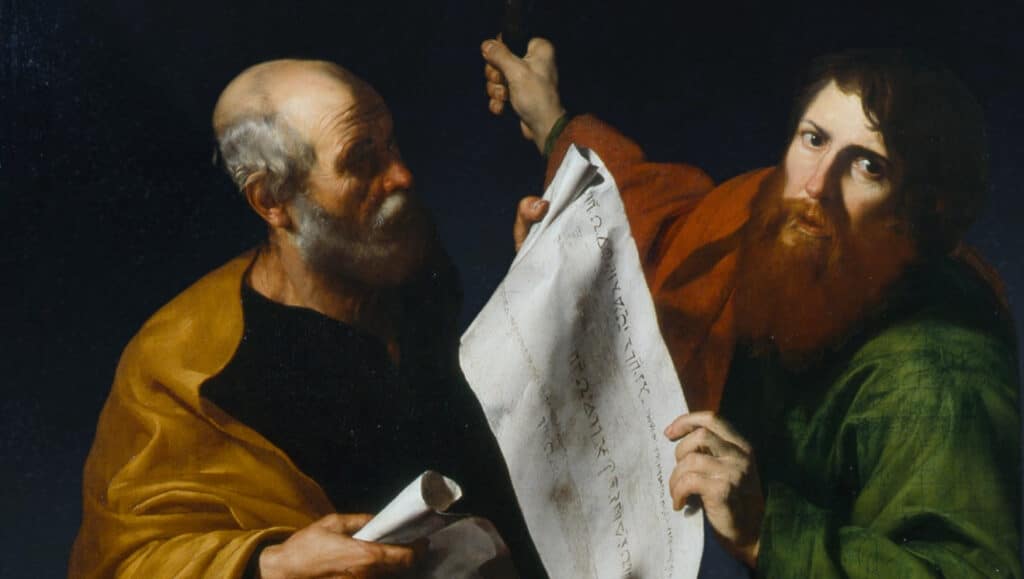
There are few days on the liturgical calendar that bring together two figures as different from one another as Peter and Paul.
The Liturgical Home: The Feast of Christ the King
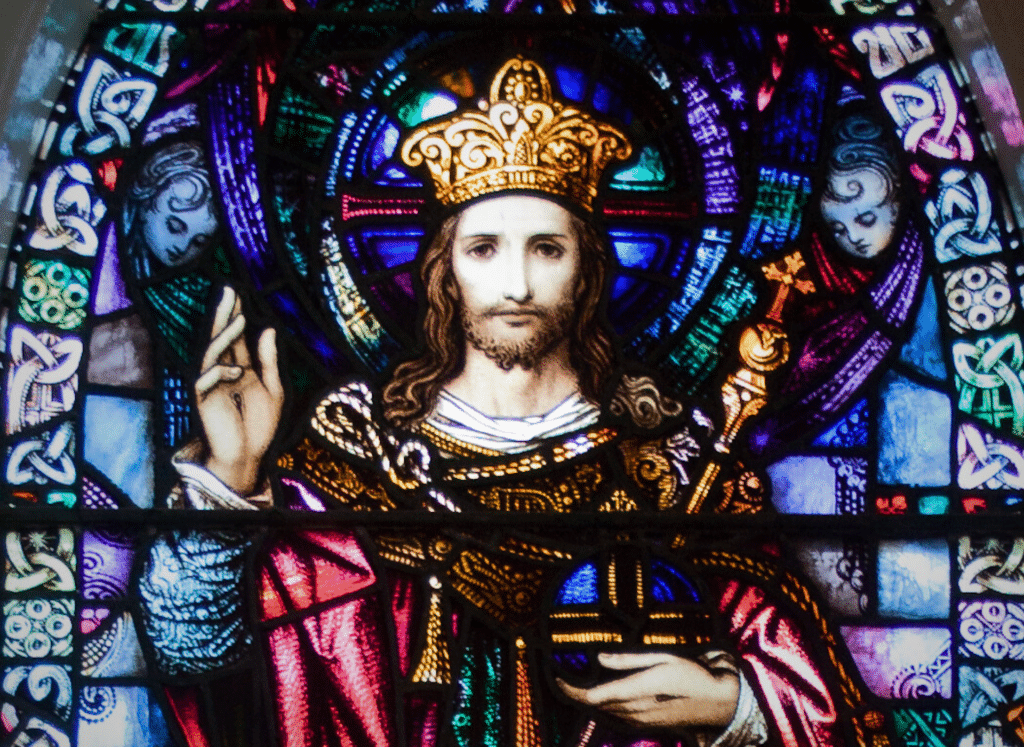
On the last Sunday of the liturgical year, Christians worldwide celebrate the Feast of Christ the King. This relatively recent addition to the Church calendar, established in the 20th century, holds a profound purpose—to acknowledge the dominion of our king, Jesus Christ, over all of creation and every aspect of our lives. We understand the…
