

Full Circle with Anglican Compass: The Editor’s Story
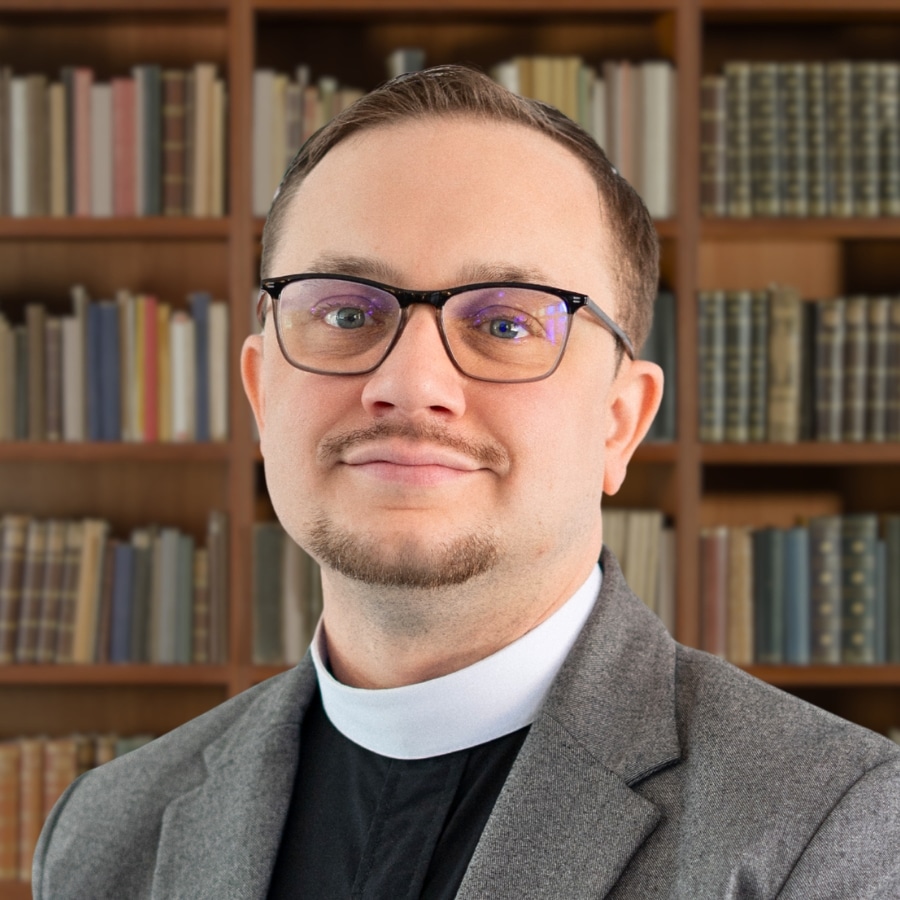
Becoming the editor of Anglican Compass was a full-circle experience. It’s possible that I wouldn’t be an Anglican without Anglican Compass, much less have been ordained a priest in this tradition. I spent my first 34 years in Southern Baptist churches, after all. Only God could have orchestrated the journey that led me to the beauty and depth of the Anglican tradition, including the vital role Anglican Compass played along the way.
Early Echoes
Years before I was actively exploring Anglicanism, the stage was being set. I grew up both in and out of the church, but when I did attend, it was in a Southern Baptist church in my North Georgia hometown. Once I was able to drive, I attended regularly and was baptized. However, I was never a perfect Baptist. Even if my theology had continued to align, I’m convinced my artistic sensibilities probably doomed me to leave that tradition.

Sponsored
I’ve been a visual artist and storyteller for as long as I can remember (my favorite medium is charcoal). Therefore, when I moved away to college, I entered as an art major before switching to English. My art history classes exposed me to the close relationship between the church and the visual arts and how each had fueled the other for the better part of two millennia. It opened my eyes to the reality that the Christian faith could be not only good and true but also beautiful.
I served as the Baptist Student Union president at this historically Methodist college, living in and learning about the broader Christian tradition. I began to love the “mere Christianity” of C.S. Lewis, as well as the way he and other writers, such as John Stott and J.I. Packer, approached the faith. But it would take me years to recognize the Anglican tradition they shared.
Seminary Sifting
After college, I attended a Baptist seminary in Louisville, Kentucky, where I enrolled in a newly launched M.A. program in Theology & Arts. The church history classes in my core curriculum and the classes in the arts led me to explore theology across denominational lines. They exposed me to the broader and much older traditions of Christianity. I found myself challenged in my Baptist theology. I yearned for something deeper and more rooted.
Don’t get me wrong—my Baptist upbringing greatly blessed me. And in Louisville, I was part of a wonderful Baptist church called Sojourn. That congregation put an uncommon emphasis on art and beauty. They also practiced some older liturgical rhythms, including celebrating weekly Communion. This only fueled me, however, to keep searching “for the ancient paths, where the good way is” (Jer. 6:16), though I didn’t know where that would lead.
The Prayer Book Lifeline
During the 2009 economic downturn, my Theology & Arts program was shuttered. I had just enough credits to be one of the only three graduates of the program the following year (fun fact: of those three, two of us are now Anglican). After graduating, I completed a “Pastor’s School” and internship at Sojourn and continued to serve there informally for several years.
Fatefully, I also took on a night-shift position at the campus hotel of my alma mater. By way of vitamin D deficiency, the night shift fueled a period of depression already seeping in from life circumstances. In the resulting blend of mental fog and existential discontent, I couldn’t put the words together to pray. I needed something to lean on.
Enter the Book of Common Prayer, which I began to use for the first time. The scripture-saturated Daily Offices of Morning and Evening Prayer became a lifeline for my faith as I struggled through the night and yearned with the Psalmist, “My soul waits for the Lord more than watchmen for the morning” (Ps. 130:6). However, I quickly realized there was much I did not understand about the Daily Office or any of the liturgies of the Prayer Book. I needed help.
Anglican Compass Guides the Way
Anglican Compass came to the rescue. When I came across Anglican Compass (then called Anglican Pastor), I was astonished by the resources on the liturgy, the church calendar, the sacraments, and even the funny clothes the clergy wear, all available even in those early days.
What impressed me most was not just the wealth of knowledge but that it was explained in a way that was accessible yet didn’t talk down to me. I was even pointed to resources that let me dive deeper into Anglican practice and theology. This was a warm, friendly welcome into the riches of the Anglican tradition.
Resounding Deep Within
I found a temporary respite in a local Episcopal parish, but their interior drama at that point meant I would need to bide my time. Finally, a couple of years later, a new ACNA plant formed—initially in the lobby of my Baptist church (that was both convenient and slightly awkward!). I hopped on board immediately.
A month into our interest meetings, I traveled to England and Ireland. In Ireland, while attending a Choral Evensong in the beautiful medieval sanctuary of St. Patrick’s Cathedral, Dublin, I followed the words of the Magnificat (Luke 1:46-55), the Nunc Dimittis (Luke 2:29-32), and the prayers without looking at the program. I didn’t need to.
I listened to the ancient words echo off the ancient stones. Centuries of saints, some buried directly beneath my feet, had prayed those words. They now resounded deep within me. I wasn’t joining a tradition. I was part of it, and it was part of me. The hours recovering my faith through the Daily Office and Anglican Compass drew me into this ancient tradition.
It’s a joy to now repay the favor and open the doors wide for others to discover the richness and beauty of the Anglican way.
Photo: the façade and spire of St. Patrick’s Cathedral, Dublin, Ireland. Photo by Jacob Davis.
M.R. James and the Anglican Ghost Story
It is no surprise… that the most influential author of the classic English ghost story was a Cambridge-based scholar of antiquities—and the devout son of an Anglican priest.

A New Day for Anglican Compass: A Guide to Our Redesigned Site
A new day has dawned at Anglican Compass with a brand new site that will carry forward our mission as the front porch of our tradition.
