

My Journey Into Anglicanism
A Brief Defense of “Conversion” Stories
Sometimes I wish I lived in the Church of the first Millennia, before the Great Schism of 1054. Things would be a heck of a lot easier. One could say “I’m a Christian” and people would more or less know what you meant. I don’t live in that world; we don’t live in that world, and nostalgically wishing we did won’t get us anywhere.
In a divided Christendom, making sense of how the Church is still one, holy, catholic, and apostolic is rather difficult. How are we to do it? Though I don’t have an entirely satisfying answer, I do have what I think is at least a start: we must take our ecclesiastical identities more seriously.

Sponsored
There is a tendency, especially among Millennials such as myself, to bemoan ecclesiastical affiliations in favor of an idealistic, genericized, and nondenominational form of Christianity. Among those of this persuasion, it’s not uncommon to hear something like, “I attend a Lutheran church, but I couldn’t care less about being a Lutheran; I’m just a ‘Christian.'”
Room for Mere Christianity
Trust me, I get this, and I too ultimately think of myself as a “Mere Christian” (this is an essay about becoming Anglican, after all), but the reality is that it doesn’t exist. Or in C. S. Lewis’s analogy, the hall is not a viable option for living; we must find a room,
. . . because it is in the rooms, not in the hall, that there are fires and chairs and meals.
C. S. Lewis, Mere Christianity (New York: Touchstone, 1996), 11
Of course, this search for a room is typically not easy. At least it hasn’t been for me. But it’s been worth all the study, all the prayer, and all the sleepless nights it has required of me. And though I realize that so-called “conversion stories” such as this are basically a dime-a-dozen these days, I still think they matter. Why? Because truth still matters enough for us to seek it, no matter the cost. It’s difficult to know where to begin, and even more so where it will end, but that’s no reason for me not to stop and plant my flag.
A Story, Not An Anglican Apology
Undoubtedly, this will not be a satisfactory explanation or defense of Anglicanism for some of you, but that’s not my intention anyway. Sure, it would be nice to convince you that Anglicanism embodies “the richest, truest, wisest heritage in all Christendom,” just as Dr. J. I. Packer says it does in The Thirty-Nine Articles: Their Place and Use Today, but this is not a theological defense; it’s just a story. In other words, this is less about why I became an Anglican than about how I became one.
That said, please feel free to critique my thinking, assumptions, convictions, or whatever else you see. Honesty and humility demand that I remain open to such objections. And I have no trouble admitting I could very well be wrong; I often am. Theology, after all, is a pilgrimage, and sometimes pilgrims take wrong turns, sometimes, but not always.
My Christian Formation
Like many Evangelical kids growing up in the late ’90s and early 2000’s, my church world basically consisted of AWANA, Vacation Bible School, WOW Hits albums, VeggieTales, Jana Alayra concerts, WWJD bracelets, Christian camps, and those “tight” Jesus Is My Homeboy t-shirts. As the years went by and I entered high school, I gradually made my faith my own. Although I took it seriously, I knew relatively little about it. I was raised to love Jesus and to know He loved me, but that was pretty much the extent of it. Or at least that’s what I picked up on.
It’s no surprise then that in my late high school and early college years, I began imbibing the theological liberalism to which I had been exposed and began doubting things like the virgin birth, God’s wrath and hell, traditional gender and sexual views, and the trustworthiness of the Bible. I loved Christianity, but deep down I felt it needed a major facelift. And to the degree that I became increasingly skeptical of the ideas of “organized religion,” I became increasingly certain of my own. By God’s grace, things changed.
The Anglican Journey Through the Young, Restless, & Reformed
In the winter of 2011, my friend Jake began nagging me to read this book he’d been working through with his mentor on basic Christian doctrine. The mere idea of “theology” and “doctrine” was enough to turn me off, but Jake never stopped his nagging. So one day, to get him off my back, I picked it up and read the first few pages.
To my surprise, I couldn’t put it down. Never before had I ever heard the basic teachings of the Christian faith presented so clearly and in a way that made so much sense. It was as if muscles and tissues and organs and skin were being added to the skeleton of knowledge I’d built in my mind as a kid growing up in Church.
Although the book’s portrait of the faith contrasted sharply with what I’d been reading elsewhere, I became convinced its depiction was more accurate and true. Before long, I began soaking up the works of other similar authors like Wayne Grudem, John Piper, Matt Chandler, R.C. Sproul, J.I. Packer, and eventually the “giants” such as John Calvin, John Owen, and Jonathan Edwards. With three years of this cyber-tutelage, I learned what it meant to be truly Protestant and, more particularly, Reformed.
My Deconversion
After about three years, I was confirmed in the calling I had felt to attend seminary in Orlando, Florida. But just months before I packed my bags and moved across the country, an exceptionally smart friend of mine whom I had recently led to Christ converted to Eastern Orthodoxy after spending his first few months as a Christian in the Reformed fold.
It sounds unbelievable, but I would be lying if I said this wasn’t one of the most transformative events of my life. As you can imagine, once I set foot on my campus, I was eager to study anything and everything about Orthodoxy and Church history; I knew a great deal about Roman Catholicism and the Reformation (or so I thought), but embarrassingly little about Eastern Christianity and the early Church.
Exploring Evangelical Tensions
At first, I was entirely closed off to even taking my friend’s positions seriously; all I wanted was to prove him wrong. Yet eventually, as I began reading and engaging, not just with what Protestant theologians said about Orthodoxy but with what Orthodox theologians said about Protestantism, some significant cracks in my theological fortress began to show.
As you would suspect, the problem areas centered on Sola Scriptura, ecclesiastical tradition and authority, and historical continuity. As an Evangelical, I had grown accustomed to hearing that “the Bible alone is the sole authority for Christian faith and practice.” Still, now I began to connect the dots between this doctrine and the divided state of Evangelicalism, and this realization began to haunt me like a ghost. It wasn’t long before I had to admit to myself and to my friends that I was in a serious theological crisis. I had no idea how it would pan out.
What I did know, however, was that I should take a good long look around before making any serious moves. After all, I was still relatively new to Reformed theology, so I didn’t want to make another drastic leap (and a much bigger one at that)without thoroughly exploring every nook and cranny of my newly discovered tradition.
College Made Me Reformed
Over the next few semesters of school, I devoured my assigned readings and other assignments, keeping a close eye out for anything that could aid my quest. Whenever I could choose my own research topics, I did, writing papers on Sola Fide in the early Church Fathers, the Filioque clause, Calvin’s doctrine of union with Christ, and even the Thirty-Nine Articles of Religion.
Helpful though these courses and papers were, I soon realized that my greatest assets were the men under whose wisdom I had been blessed to sit, both in the classroom and in the pew. I spent many hours with these wise guides, not only reading their extremely pertinent books (e.g., Reformed Catholicity: The Promise of Retrieval for Theology and Biblical Interpretation and Know the Creeds and Councils) but also asking them questions and listening to their thoughts over burritos at Chipotle or pints of beer at local pubs. Over time, I developed a much more holistic understanding of the issues I had been struggling to answer. Eventually, I could step back and assess how this process had changed me.
I was still Reformed: I still affirmed the solas, still believed the so-called “doctrines of grace,” still appreciated the covenantal approach to the Scriptures, still revered Reformers like John Calvin and Martin Bucer, and still valued the Reformed confessions (especially the Thirty-Nine Articles). But, make no mistake about it, I also knew I was Catholic.
My Re-entry Into Christianity
Had I not been attending the Cathedral Church of Saint Luke throughout this time, I think I would have felt something akin to ecclesiastical homelessness. However, it was here, at this beautiful Anglican parish, with clergy from the Reformed, Lutheran, Anglo-Catholic, and even “Anglo-Orthodox” streams, that I saw how, even in my reoriented and somewhat odd ecclesiastical identity, I still had a home.
You can be sure then that while I had been weathering my “theological crisis,” I had also begun to mine the rich depths of the Anglican tradition, studying it from various angles whenever I found the time. I found a bridge from the Reformed tradition via men like Thomas Cranmer, George Whitefield, J. C. Ryle, and J. I. Packer, but, believe it or not, the most helpful gateway was a man who wasn’t even Anglican, John Williamson Nevin.
From Young, Restless, & Reformed to Anglican
In brief, Nevin was a 19th-century American “High-Church” Reformed theologian who, along with his colleague Philip Schaff at Mercersburg Seminary, emphasized the Incarnation in ecclesiology and soteriology, patristic and creedal theology, and sacramental, churchly piety over against the individualistic, privatized religion of revivalism.
This school of thought, known as the “Mercersburg Theology,” resembled the Oxford Movement in many striking and fascinating ways. It is for this reason that Bradford Littlejohn, in comparing the two, writes,
It thus appears that a good high-church Reformed theology, and a good high-church Anglican theology, reduce to much the same thing—a rich patristic theology of Church and sacrament, enriched with a healthy dose of Reformational soteriology.
W. Bradford Littlejohn, The Mercersburg Theology and the Quest for Reformed Catholicity (Eugene, OR: Pickwick Publications, 2009), 123
Studying at the feet of Nevin, therefore, paved the way for me to move into the Anglican fold without ever having to feel the slightest bit of unease or shame, even about the Anglo-Catholic wing. In fact, more than anything, I felt right at home among them even though, at the end of the day, I was still Evangelical, Protestant, and Reformed. Or, better yet, a “Reformed Catholicke,” as conformist Puritan William Perkins put it.
Do your best to present yourself to God as one approved, a worker who has no need to be ashamed, rightly handling the word of truth.
2 Tmothy 2:15
My Current Anglican Journey
That’s the short-ish version of my journey along the Canterbury Trail. But in many ways, this journey has only begun. Right now, I am finishing my third and final year of seminary. However, I am still trying to read as widely as I can within the different streams of the Anglican tradition—broad, low, and high—but, more importantly, I am learning the ins and outs of the Book of Common Prayer and the Daily Office.
I think I speak for all converts to Anglicanism when I say that the best thing about it is its liturgical worship and piety. The BCP is pretty hard to beat when it comes to morphing rich theology and the Bible itself into prayer and worship. Having now spent the better part of the past two years at a parish that takes the Prayer Book and its liturgy with the utmost seriousness, my entire outlook and conception of worship have been entirely transformed and strengthened.
Word, Sacraments, & Prayer
Every Sunday I eagerly anticipate going to Church, not because I need a spiritual boost, not because I need something biblical to think about (most of the time quite the opposite is the case!), not because I need an outlet to express my love for and praise of God, but because God meets us there as we confess our sin, hear the promise of absolution, recite the Creed, pray for the Church and the world, hear the Word preached, and receive the Sacrament.
It’s an experience too difficult to describe, so if you’ve never been to an Anglican church for worship, I suggest you do so soon. At the very least, I promise it will be memorable. Who knows, maybe you’ll even be the next one to catch the Anglican fever!
Glory be to the Father, and to the Son: and to the Holy Ghost;
As it was in the beginning, is now, and ever shall be: world without end. Amen.
Image: Public Domain via Pixabay
Published on

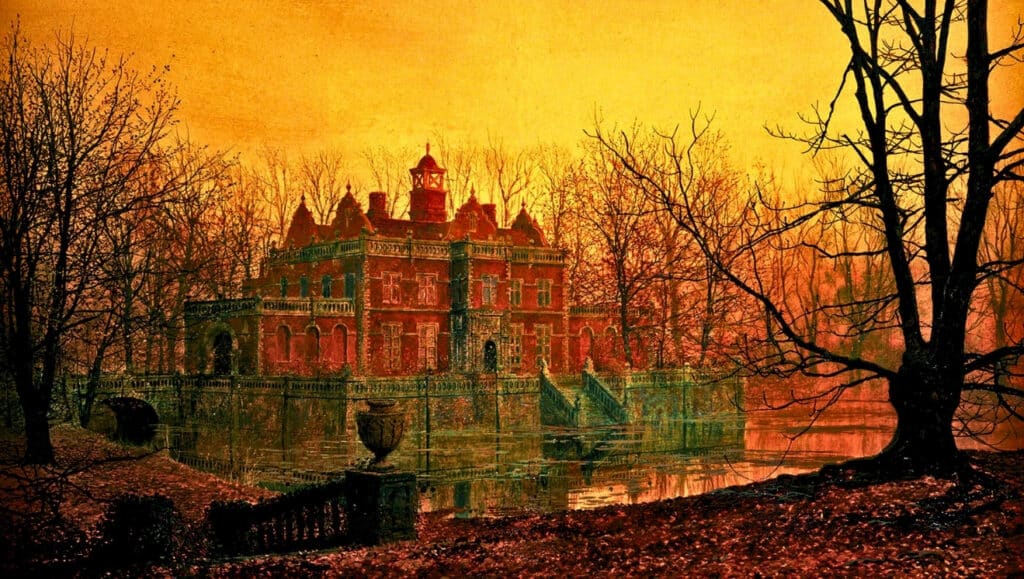
M.R. James and the Anglican Ghost Story
It is no surprise… that the most influential author of the classic English ghost story was a Cambridge-based scholar of antiquities—and the devout son of an Anglican priest.

An Anglican Spider Bite: My Journey into the Anglican Way
My Anglican journey began in a class about the theology of the early Church—specifically, with a particular article. Before we read J.N.D. Kelly’s Early Christian Doctrines, our professor wanted us to read a short biographical essay on him by H.E.J. Cowdrey. Now, Kelly himself entered Oxford as a Presbyterian. However, according to Cowdrey, “he was…
