

YouTube Apologetics with Anglican Aesthetics
Technology changes the way we communicate, and new forms of communication cultivate new audiences with novel expectations for how best to consume and engage with information, including the information that “Christ died for thee” and why he came to do so. Following our explorations of compelling new voices advocating for orthodox Anglican Christianity online, such as Joe Colletti, Jeremiah Short, and Fr. Dan Hixon, I’m pleased to introduce another thoughtful contributor to this vibrant digital landscape: Sean Luke.
As the founder of “Anglican Aesthetics,” Luke brings a unique blend of intellectual rigor and an academic level of appreciation for beauty to his engagement with contemporary theological discussions. Sean was kind enough to sit down for a virtual interview from his office at Trinity Evangelical Divinity School a few weeks back and share his story.
Sponsored
A Round Trip from Anglican Baptism to Convinced Anglican
Sean Luke shared with me the story of how his parents were married in India in a St. Thomas Christian church before immigrating to America. St. Thomas or Mar Thoma Christians are an ethno-religious community that spans across several eastern church bodies and traces its origin to the evangelization of St. Thomas the Apostle in the region. Sean’s mother was Anglican, her father having been a priest-convert from the Eastern Orthodox church, and his Father a member of the Jacobite or Syriac Orthodox church. Although Luke didn’t grow up with an active belief in God, he was, in fact, baptized an Anglican in infancy, a fact he wouldn’t learn until he returned to the faith of his mother and grandfather as an adult.
A Brother’s Conversion
His early years, shaped by a Christian mother and a father whose Jacobite Orthodox background leaned more toward ritual than a “vital relationship with Christ,” found Sean describing himself as a “closet agnostic.” However, a significant shift occurred at age 15, during his sophomore year of high school. His brother George returned from Vanderbilt University “on fire for the Lord.” This ignited a four-month period where Sean, alongside his brother Thomas, delved deeply into Christian claims, listening to podcasts, debates, and lectures, and engaging with arguments against atheism and agnosticism. This period of “dialogical learning,” as Sean describes it, was profoundly formative in his acceptance of Christ. Luke recalls his surprise as he began his undergrad that not everyone engaged in such intense discourse at home.
His eventual embrace of Anglicanism was similarly intentional. Initially a Reformed Baptist, Sean’s views shifted to paedobaptism during his first year at Trinity Evangelical Divinity School—a change greatly influenced by Scott McKnight’s work. At this point, he was a “loose Anglican by default,” feeling they were “the only ones that’ll take me” as he grappled with more profound ecclesiological questions. In rejecting the credobaptist position, Luke felt that he needed to honestly contend with the claims of a much broader variety of historic churches.
Counsel from a “Lutheran” Wife
Sean Luke then spent a year or two really wrestling with Roman Catholic arguments, spurred by his wife, a cradle Lutheran who was already attending an Anglican church. His wife urged him to study the “original issues” of the Reformation, leading him to read reformers like Martin Chemnitz and then later William Whitaker alongside their contemporary Catholic apologists such as Robert Bellarmine. This intensive study ultimately guided him toward a “high-church Anglicanism” he characterizes as “Anglo Catholic adjacent.”
By the time 2022 rolled into 2023, Sean was a “convinced Anglican.” He particularly found that the Anglican critique of the Roman “system of merit” clarified the belief that Christ removes “all temporal debt of punishment.” He observed Anglicanism as uniquely combining episcopal polity with the Protestant understanding of biblical authority and the doctrine of justification. Sean also found a spiritual home at Church of the Resurrection in Wheaton, which he began attending in 2017 with his wife. He appreciates the community there and the traditional Eucharist liturgy, as well as the leadership. He notes that “Rez” skillfully blends charismatic and high-church elements in a reverent way.
“Anglican Aesthetics”: A Vision of Beauty and Reformed Catholicity
Sean Luke’s online ministry, “Anglican Aesthetics,” developed organically from his theological journey and his desire to engage in thoughtful conversation. He began by simply “putting ideas out there for critique and feedback,” a method that helped him refine his thinking and discover new sources. This willingness to point a camera at himself and have an open conversation with the world struck me as a combination of some generation-specific sensibilities (young millennials/Gen-Z) regarding technology, but also a reflection of Sean’s unique approach to truth and learning. As his Anglican convictions deepened and solidified, his ministry’s purpose evolved into a strong desire “to introduce people to what I take to be the beauties of Reformed Catholic spirituality and Reformed Catholic theology.”
The very name “Anglican Aesthetics” encapsulates a central belief for Luke. He contends that Anglicanism distinctively preserves “the historic structures of the church that facilitated an encounter with beauty and the beauty of God in the face of Jesus,” all while avoiding “those other things that I think are destructive.” For Luke, beauty is not merely subjective but an objective reality—the “gravitas of love” and the “fragrance of value” (citing Dietrich von Hildebrand) that intrinsically evokes affection. Drawing on a rich tapestry of philosophical and theological thinkers, including Plato, Plotinus, Nicholas of Cusa, and Bonaventure, he argues (in his videos as well as numerous academic articles) that beauty serves as the “self-evidence that the good is worth pursuing.”
The Aim of “Anglican Aesthetics”
Sean’s online endeavors aim to:
- Highlight the Allure of Anglicanism: Sean Luke seeks to portray Anglicanism as a “lifegiving vision of what the church should be.” He recognizes that many, especially young people online, are drawn to liturgical and magisterial traditions for aesthetic reasons. Anglicanism, he believes, offers an “orthodox expression of Reformed Catholicity” for those who wish to hold to their Reformation convictions while appreciating the grounding aspects of the faith often found in Roman Catholicism.
- Encourage Ecumenical Exchange: Luke’s ministry strives to establish a “genuine ecumenical space” for dialogue and constructive critique, particularly with Roman Catholics. Rather than a confrontational “slam dunk debate” approach, he endeavors to present different visions of the Church, enabling inquirers to make informed decisions. He suggests that a properly Reformed Catholic liturgy can make things “shine brighter” by purifying errors that are “destructive to the true beauty.” The Anglican “reform principle,” he notes, “allows you to be honest with history,” appealing to a “norming guide, not subject to all of the complicated threads of church history, that serves as a judge and an arbiter over those conflicting threads, which is Holy Scripture.”
- Articulate Anglican Distinctives: Sean’s videos frequently address common misunderstandings and clearly explain the Anglican perspective on key theological issues. He wants to present an honest and attractive vision of Anglicanism for those trying to discern the truth online, where every other tradition presents their way as the way.
Anglican Aesthetics Showcase
Sean Luke’s YouTube channel showcases his commitment to these goals, but please don’t take my word for it. I encourage you to take a look at a few prime examples for yourself:
This video directly addresses a common critique from Roman Catholics, offering essential historical context. Luke clarifies that while Henry VIII acted as a catalyst for the English Reformation, he “unleashed events that were out of his control where God used really foolish things to build a very wise thing.” This video goes on to cover the entire Tudor reign and influence on the Church of England, and the form of Christianity that emerged from that period.
An earlier video, this one spells out Luke’s proposal for unifying Protestants under the episcopate, emphasizing “altar and pulpit fellowship” and recognizing various groups as “provinces of the church Catholic.”
This video delves into his academic work on aesthetics, revealing the deep philosophical and theological foundations of his belief in beauty’s importance to faith. It draws from his peer-reviewed paper of the same title, published in the Journal of Religions
This video is a primer on Anglican Eucharistic theology, presenting it as a coherent understanding of the Eucharist that is both reformed and catholic. This topic is also explored in his article, “The Impetrative Sacrifice of the Mass,” published by The North American Anglican.
Rebuilding Anglicanism
Luke also engages with the Reconquista movement, which encourages conservatives to remain within liberalizing mainline denominations. While acknowledging the value of long-established institutions, Sean argues that when church structures become unfaithful to God’s word (especially in a case like the consecration of an openly gay bishop) it becomes both necessary and faithful to rebuild outside those structures. He draws a parallel to Martin Luther’s situation, asserting that if the Lord “hasn’t seen fit to redeem the structure that you’re in,” then faithful action demands building anew.
For Sean, rebuilding Anglicanism means “rebuilding a culture that’s habitually centered on the Book of Common Prayer,” both in corporate worship and private devotion. He stresses that this immersion in prayer helps resist modernism, and he identifies it as a “major problem” that many Anglican parishes “don’t teach people how to use the Book of Common Prayer.” He highly recommends both the 1662 and 2019 Books of Common Prayer, as he believes they closely align with our historic Anglican formularies. Regarding worship styles, Luke thinks music ought to be aligned with the “trajectory of the service” as outlined in the BCP, which he believes can generously accommodate various styles.
What’s Next for Anglican Aesthetics?
Looking forward, Sean Luke has clear aspirations for his online ministry and his academic pursuits. He intends to develop more “explicit catechetical resources” in video format for clergy, designed to supplement parish ministries by teaching foundational Anglican principles and spirituality.
In the longer term, Sean plans to pursue a Ph.D. in theological aesthetics, wanting to reside at the “intersection between orthodox Anglicanism and the academy.” This vision is inspired by mentors like Kevin Vanhoozer, emphasizing the crucial role of the “pastor theologian.” While he acknowledges that the ordination process in his current diocese is “a little bit different,” he is “definitely open” to formal ordained ministry as a transitional deacon and then a priest in the future.
Sean Luke’s work with “Anglican Aesthetics” offers a thoughtful, intellectually robust path that takes the aesthetic element seriously for those exploring Anglicanism as a viable choice today. His project of blending beauty, historical theology, and strong apologetics into an accessible online format makes him stand out in a growing movement of forward-thinking internet evangelists. I encourage you to explore his channel and engage with his work as he continues to articulate and build out a faithful Anglican presence online.
Digital collage by Peter Johnston, with photograph by Peter Fleming from Pexels, courtesy of Canva.
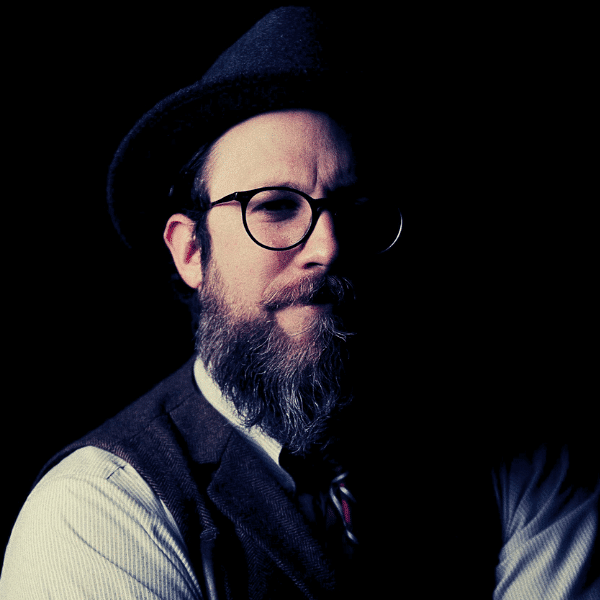

Young Anglican, A Gen Z Voice in the Digital Wilderness
Among the rising Gen Z voices in the search for meaning is Joe Colletti, known online as “Young Anglican.”
Ministry Spotlight: Online Apologist Jeremiah Short
Following his own path of convergence with this cohort of dedicated online apologists, Jeremiah Short, known widely as “The Black Doctor,” has risen as a significant figure. His young but impactful ministry has had a particular focus on reaching those unfamiliar with the Gospel, including individuals coming from Islam and other faith traditions.
