Hymn Guide: O God Our Help In Ages Past
“O God Our Help In Ages Past” is a venerable hymn on God’s eternal faithfulness. Isaac Watts wrote the text as a paraphrase of Psalm 90:1-6, looking to God as the one constant in a changing world, a rock in the midst of the passing stream of time.
It is typically sung to ST ANNE, an accessible and stately tune that fits the steady rhythm of the text. It is appropriate whenever time is the theme: for the new year, for birthdays or funerals, or when Psalm 90 is read. In the UK and Canada, it is often sung for Remembrance Day on November 11.
Sponsored
Verse by Verse
Watts’ original version featured nine verses. John Wesley edited this to seven, and most modern hymnals reduce it further to six. Here, I include seven verses, adding the “flowering fields” verse, which reflects the poppies of Remembrance Day.
Verse 1
O God our help in ages past
Our hope for years to come
Our shelter from the stormy blast
And our eternal home
The opening verse features four possessive constructions to depict the character of God: “our help,” “our hope,” “our shelter,” and “our eternal home.” This poetic repetition, called “apposition,” is notable in Old English literature and carries into some of the best modern English poetry.
In this case, the effect gives a more rounded sense of the practical meaning of God’s eternity. Because he exists from generation to generation, he is our help, our hope, our shelter, and our home.
Verse 2
Under the shadow of your throne
Your saints have dwelt secure;
Sufficient is your arm alone,
And our defense is sure.
Each subsequent verse explores in its own way the meaning of God’s eternity. The second verse highlights the saints’ security in God’s sufficiency. The clear implication is that God establishes saints by grace, not by their own merit. If our standing depended upon our own strength, then our defense would not be sure. But our confidence rests in God and his unmovable throne.
Verse 3
Before the hills in order stood
Or Earth received her frame,
From everlasting you are God,
To endless years the same.
The third verse situates God’s eternity in relation to creation, to the hills and the frame of the earth. This verse is inspired by Psalm 90:2, and it helps to note that Psalm 90 is identified as “A Psalm of Moses.” We can see the connection here, since Moses, who wrote of God’s Creation in Genesis, writes here of God’s existence even before the earth was made.
Verse 4
A thousand ages in your sight
Are like an evening gone,
Short as the watch that ends the night
Before the rising sun.
Because God is eternal, time is a relative matter for him. A thousand years are like a day or even a watch in the night. Thus, what can seem to us creatures as a very long time can be for God a short span, like the blinking of an eye.
This does not mean, however, that God does not care for his creatures in their limited time. In Peter’s second epistle, for example, he explains that God waits to fulfill his prophecies in order to give his creatures time to repent:
But do not overlook this one fact, beloved, that with the Lord one day is as a thousand years, and a thousand years as one day. The Lord is not slow to fulfill his promise as some count slowness, but is patient toward you, not wishing that any should perish, but that all should reach repentance.
2 Peter 3:9
Verse 5
Time, like an ever-rolling stream,
Bears all its sons away;
They fly, forgotten, as a dream
Dies at the op’ning day.
Nevertheless, we should be clear-eyed about our limited time. If time is a river, sometimes we feel our lives are a lazy float, and sometimes we feel like we are going through the rapids. In either case, however, time is carrying us away, and it won’t be long before we reach the end.
Verse 6
Like flow’ry fields the nations stand,
Pleased with the morning light;
The flow’rs beneath the mower’s hand
Lie with’ring ere ’tis night
This verse is frequently omitted, perhaps because its poetry is more cumbersome than the others. But there are two good reasons to consider singing it. First, it captures the idea of Psalm 90:5-6: the same plants that flourish in the morning may be cut down by evening. Where God is eternal, we are temporal.
Second, this verse applies the idea of sudden loss, especially to the nations, making it appropriate for any consideration of conflict or war. This verse is therefore fitting for Remembrance Day on November 11, which commemorates the end of World War I. In fact, the verse almost reads as if it were written to describe the horrific slaughter of the World Wars. It is therefore a helpful reminder of both the horror of war and the necessity of turning back to God, who remains our only hope.
Verse 7
Our God, our help in ages past,
Our hope for years to come,
Be thou our guard while troubles last
And our eternal home
The final verse mostly restates the first, with a different third line. That third line, however, transforms the entire hymn by turning it into a prayer: “Be thou our guard while troubles last.” This then changes the meaning of the fourth and final line, which becomes a request that God be “our eternal home.”
By ending with a prayer, Watts makes the hymn feel more like Psalm 90 as a whole, which also transitions to a prayer in its final verses. This gives the hymn a devotional weightiness and a sense of completion. When we realize the limits of our time on earth, we are all the more motivated to find our rest in God.
On Video
The first video, from Westminster Abbey in London, features organ, congregation, and boys’ choir. The second video has similar instrumentation in a fresh, dynamic setting from Lagos, Nigeria. This illustrates Anglicanism’s global expansion, especially in Africa. The third video is a lovely contemplative rendition on guitar.
Image: Poppy Field at Gilmorton in Leicestershire with All Saints Church in the background, photo by Jim Monk, courtesy of iStock.
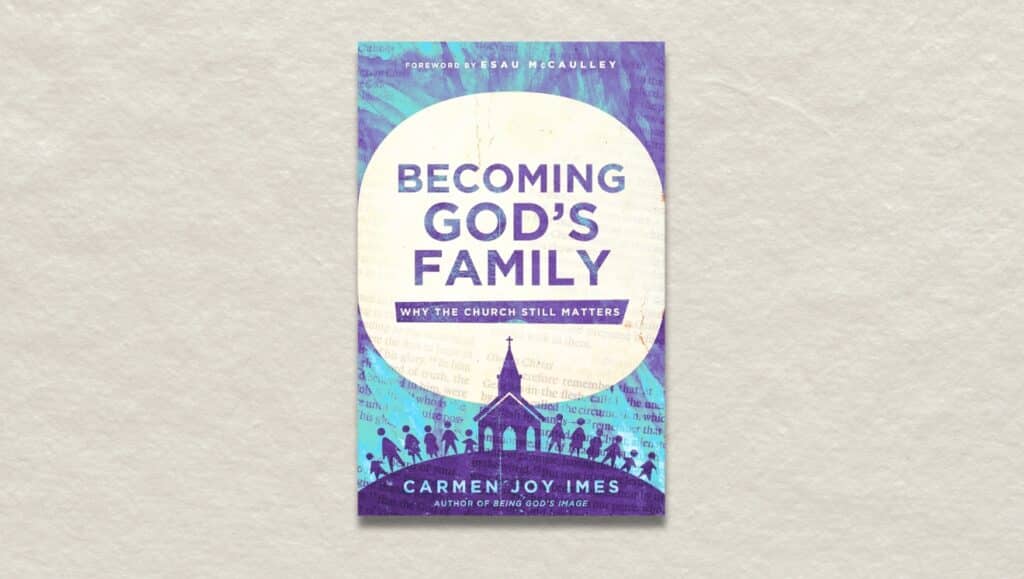
Book Review: Becoming God’s Family by Carmen Joy Imes
In Becoming God’s Family: Why the Church Still Matters, Dr. Carmen Joy Imes invites readers to rediscover the beauty of life together as God’s people.

We Believe: God from God, Light from Light, True God from True God, Begotten, Not Made
In 1994, my sister died from heresy. That’s not hyperbole. It’s not a metaphor. It’s the plain truth. Leslie had contracted HIV from a botched artificial insemination procedure in the late 1980s. She kept it hidden from most everyone, and in the secrecy of her illness, she searched desperately for healing. Leslie tried everything—strict diets,…