

Nine Lessons and Carols: A Rookie Anglican Guide
The Anglican tradition has inherited many ancient liturgical practices. Therefore, it may be surprising to learn that the Festival of Nine Lessons and Carols (traditionally held on or near Christmas Eve) is a relatively recent invention. It celebrated a century of the practice in 2018. Born from the profound grief and turmoil of the First World War, mere weeks after its conclusion, it embodies a powerful narrative of resilience and hope.
Here’s an example of the Festival of Nine Lessons and Carols at King’s College on Christmas Eve in 1992:
Sponsored
Who Created the Service of Nine Lessons and Carols?
The author of Nine Lessons and Carols was the Rev. Eric Milner-White. He graduated from King’s College, Cambridge, and was appointed chaplain at the same college in 1912, four years after his ordination as a priest. When the war erupted in 1914, he volunteered as a military chaplain and witnessed the horrors of trench warfare on the Western Front. “Most of life is at night,” he wrote in a letter back home,
“and the nights are filled with prolonged terror—a horrid, weird, furtive existence. . . . Battle is indescribable, unimaginable. A continuous firework of light balls goes up from the German trenches. But most awesome is the noise. We feel powerless against those splitting cracks and roars, and dream of the metal tearing its way into the bodies of poor men.”
Decorated for courage under fire in combat, he was released after what he called “a battle of special horror” in early 1918. He then returned to King’s College, where he was appointed Dean.
Why Create the Festival of Nine Lessons and Carols?
After the war ended on November 11, 1918, Milner-White set out to create a special Christmastide service. This was “as a gift to the city of Cambridge” that would serve two purposes.
Grieving the Loss of Young Men from the War
Twenty-three percent of the members of King’s College had died during the war, including Milner-White’s roommate. Today, in the chapel of King’s College, an engraved plaque lists the names of the dead. A much later dean of King’s College noted that this list was assembled long after the first Lessons and Carols service. On Christmas Eve, 1918, no one knew exactly who among the members was alive or dead.
Attracting the War-Weary with Simple Beauty
The service has intellectual depth. In Milner-White’s own words, “the main theme is the development of the loving purposes of God” as viewed “through the windows and the words of the Bible.” Yet he aimed at simplicity rather than complex explication of God’s purposes in human history. Rather than a lecture, he designed the service to focus on “colour, warmth, and delight.” Drawing on a lessons-and-carols tradition that stretched back at least to Edward White Benson at Truro Cathedral in Cornwall in 1880, he established the tradition of Nine Lessons and Carols at King’s College on Christmas Eve in 1918.
(Editor’s Note: We see the service’s simple warmth, especially in its opening “Bidding Prayer,” which Ashley Tumlin Wallace writes about here.)
The Lessons in the Nine Lessons and Carols
The specific carols sung during the service constantly change from year to year, but the service at King’s College always begins with “Once in Royal David’s City” and ends with “Hark! The Herald Angels Sing.” However, the following lessons (Scripture readings) have been in use since 1919.
- First Lesson from Genesis 3:8-15; 17-19. God tells sinful Adam that he has lost the life of Paradise and that his seed will bruise the serpent’s head.
- Second Lesson from Genesis 22:15-18. God promises the faithful Abraham that all the nations of the earth shall be blessed through his seed.
- Third Lesson from Isaiah 9:2, 6-7. The prophet foretells the Savior’s coming.
- Fourth Lesson from Isaiah 11:1-3a, 4a, 6-9. Isaiah foreshadows the Peace that Christ, the Prince of Peace, brings.
- Fifth Lesson from the Gospel of Luke 1:26–35, 38. The angel Gabriel salutes the Blessed Virgin Mary.
- Sixth Lesson from Luke 2:1, 3-7. St. Luke recounts the story of Jesus’ birth.
- Seventh Lesson from Luke 2:8-16. The shepherds go to the manger.
- Eighth Lesson from the Gospel of Matthew 2:1-12. The star leads the wise men to Jesus.
- Ninth Lesson from the Gospel of John 1:1-14. St. John unfolds the great mystery of the Incarnation.
What is Milner-White’s Other Legacy?
Milner-White devoted the rest of his life to the theme that Christianity’s simple beauty offered hope to an increasingly secular culture. He sparked renewed interest in stained glass windows as a way to express simple Christian truth in beautiful form. He wrote several simple prayers, one of which made its way into the 2019 Book of Common Prayer as the first Prayer for Mission in Evening Prayer:
O God and Father of all, whom the whole heavens adore: Let the whole earth also worship you, all nations obey you, all tongues confess and bless you, and men, women and children everywhere love you and serve you in peace; through Jesus Christ our Lord. Amen.
As you listen and worship during Lessons and Carols, occasionally consider that this simple service expresses hope. Despite the mess that humans have made of our world, God has a plan of redemption for it.
Learn More About Nine Lessons and Carols
- Here’s an article on the carol that opens the service every year: “Once in Royal David’s City.”
- In 2016, John Yates III gave Anglican Compass readers Four Meditations for the Nine Lessons and Carols.
- For more reading pleasure, an interview with William Edwards, author of The Festival of Nine Lessons and Carols (Rizzoli, 2004), is available here.
- You can listen to each year’s Christmas Eve performance of Nine Lessons and Carols from King’s College Chapel here.
- Ashley Tumlin Wallace writes about Lessons and Carols and other Advent traditions in her book, The Liturgical Home: Advent.
Photo: David Beale on Unsplash.

The Annunciation: A Rookie Anglican Guide
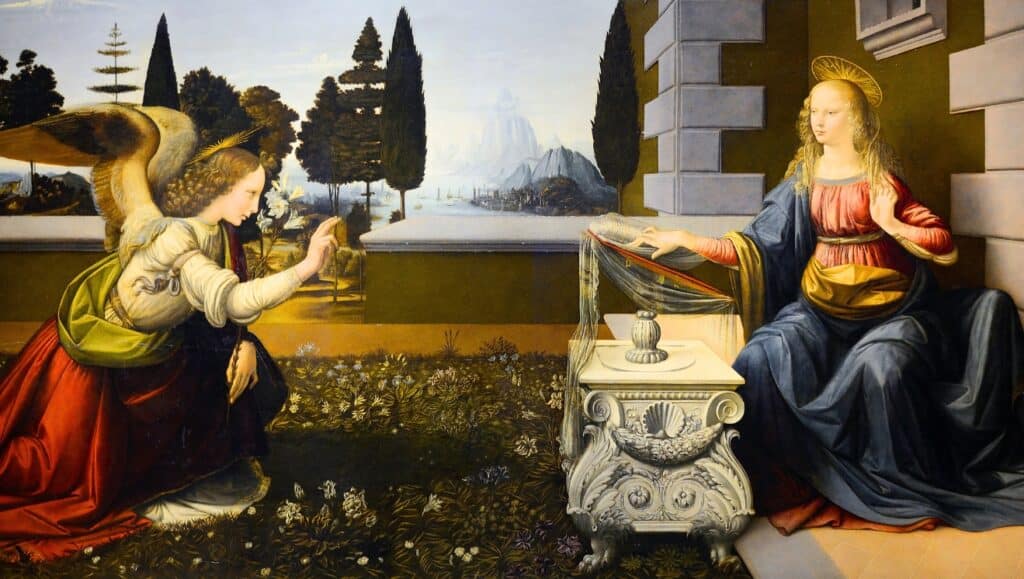
The Annunciation refers to the conception of Jesus by the Holy Spirit in the Virgin Mary and the announcement of this pregnancy by the angel Gabriel to Mary. The Church celebrates the feast on March 25, which is easy to remember when you realize it is precisely nine months before Christmas! This day reminds us…
The Blessed Virgin Mary: A Rookie Anglican Guide
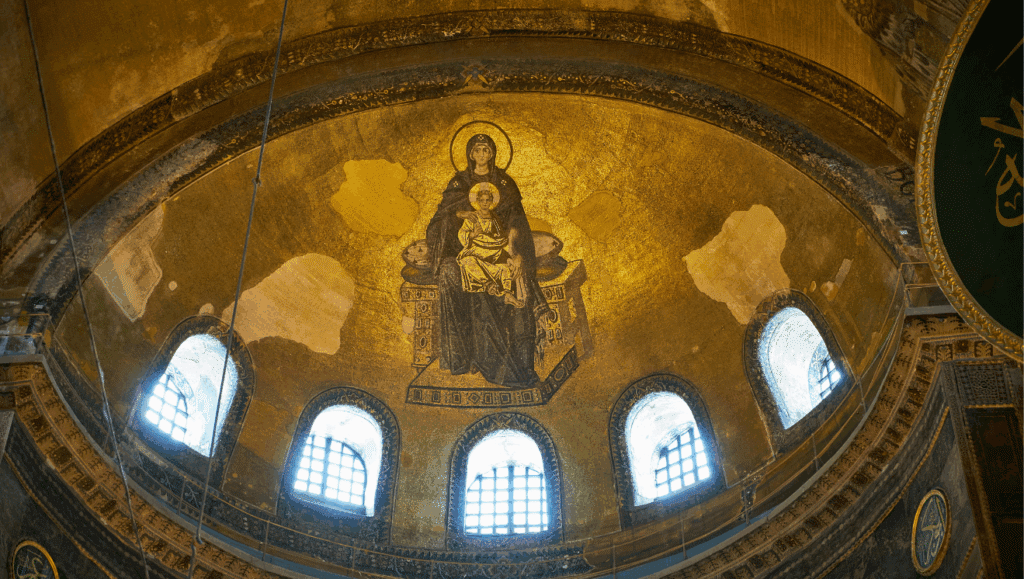
March 25th is the feast day commemorating the Annunciation, the announcement to the Virgin Mary that she would bear the Son of God. See Luke 1:26-38 for the beautiful story. We observe this day because it is nine months before Christmas Day. Mary: The God-Bearer, or Mother of God Mary’s faith lives on, and many generations have…
