

Thomas McKenzie’s The Anglican Way
Background
In the summer of 2016, my wife and I were preparing to move to a new city. Leading up to the move, we often returned to the discussion of finding a new church community. She was raised in the Baptist tradition, and I was raised as a Pentecostal. Despite these backgrounds and our identification with the Pentecostal church, we agreed to consider attending a more traditional church. Shortly after arriving in Kingston, I received an invitation to attend Living Waters Anglican Fellowship.
Our initial experiences at Living Waters were both confusing and intriguing. In many instances, the service’s most peculiar components were the most compelling. I didn’t fully understand the theology of communion, but I could tell there was sincere reverence for the bread and wine.
Sponsored
After some time in prayer and reflection, my wife and I decided to stay at Living Waters. Though we learned much about this denomination in the first few months, Anglicanism still confused us. Because of this ongoing confusion, my pastor gave me Thomas McKenzie’s The Anglican Way.
Strengths of The Anglican Way
In The Anglican Way, McKenzie provides a useful starting point for understanding the particulars of Anglican theology and practice. After reading McKenzie’s book, I have the impression that Anglicanism is a thriving denomination that embraces diverse perspectives and backgrounds.
This certainly wasn’t my belief before reading The Anglican Way. In my (albeit limited) personal experience, Anglicans are both open-minded and welcoming; I was delighted to learn that these trends are not confined to my congregation but are characteristic of many churches worldwide. The emphasis on “unity in the midst of diversity” (4) makes Anglicanism very welcoming for Christians raised in other traditions.
Holy Communion Explained in The Anglican Way
McKenzie’s discussion of Holy Communion was especially enlightening. After observing communion for the first few weeks at Living Waters, I mistakenly thought that Anglicans believed in transubstantiation. As McKenzie plainly lays out, Anglicans don’t generally believe in transubstantiation, but in the “true but non-literal” consumption of Christ’s blood and body (154).
“Anglicans,” explains McKenzie, “believe that Christ is mystically present in communion” (196). The Eucharist is the most important part of an Anglican service (186), and it is during communion that the Christian experiences a “supernatural transfer […] in which God is giving us himself” (154). The humble acknowledgment of the mystery surrounding communion, alongside the sincere reverence for the Eucharist, makes the Anglican understanding of this sacrament very beautiful.
Bishops & Apostolic Succession
Another interesting component of McKenzie’s book is his discussion of bishops and apostolic succession. As McKenzie notes, Anglicans believe that “Bishops are the inheritors of the ministry of the Apostles,” and that they are responsible for “defending the theology of the church” (230).
I certainly don’t know the history well enough to confidently say that bishops actually have a direct connection to the apostles. Regardless, understanding the position in this manner helps crystallize the responsibilities placed on bishops. To my mind, this understanding of a bishop’s role illuminates some of the reasons behind Anglicanism’s emphasis on tradition and hierarchy.
Christ-Centered
Perhaps the main strength of McKenzie’s book is his apparent love for Christ. This love keeps his denominational preference in its proper place:
Knowing Anglican stuff and doing Anglican stuff is not the point. Everything in this book is offered simply to know the deep love God has for you in Jesus Christ (95).
From the outset, it is obvious that McKenzie understands and cherishes the Anglican tradition (xiii). McKenzie admits, though, that for some Anglicans this tradition has become an “idol” (95). A healthy understanding of Anglicanism, like any other Christian denomination, must begin with Christ:
Jesus Christ is the heart of the Anglican Way because he is the heart of our lives in this world and in the age to come” (7).
A denomination is simply a means to an end, and that end should always be Christ. McKenzie’s acknowledgment of this reality helps to establish the legitimacy and vibrancy of Anglicanism.
Weaknesses
I have a few criticisms of McKenzie’s book: two are relatively minor, and one is more substantial. First, I think his characterization of Pentecostals is somewhat misguided. McKenzie claims that Pentecostals believe that there are “two categories of Christians,” with the higher position being reserved for those who have spoken in tongues (48). Many Pentecostals hold this view, but this certainly isn’t the case for all of us, which is my issue. McKenzie rightly explains that this belief isn’t “good Christian theology” (49). Thankfully, McKenzie’s position is one that more and more Pentecostals are starting to accept.
Second, Chapter 29: “Women in the Clergy” seems out of place. Given the importance of the topic, I would have liked to see this chapter appear earlier in the text. As it stands, it feels tacked on. Simply reorganizing the chapters so that “Women in the Clergy” appears in the core of the book, rather than at the very end, would be a welcome change.
Third, and most importantly, I have concerns with Chapter 11: “Anglicans Are on a Mission.” If my only knowledge of colonial history were McKenzie’s book, I would have the impression that Anglican missionaries almost always carried out their objectives admirably and that there were very few issues with racism or bigotry underlying Christian thought and practice in the British colonies. I find it very hard to believe that this is the case.
I recognize that McKenzie is constrained by space, given the breadth of his topic. Nevertheless, the space he devotes to the history of Anglican missions does not adequately address the deeply sinful perspectives that have accompanied mission work throughout colonial history.
Final Assessment
For some people, McKenzie’s book will be the beginning of their exploration of Anglican theology and practice. For others, McKenzie’s overview will be enough to make sense of Sunday morning worship, Anglican theology, church hierarchy, the calendar, and many other topics. Regardless, The Anglican Way provides an informative and worthwhile consideration of Anglicanism, one that I’ve found beneficial.
. . . continue in the faith, stable and steadfast, not shifting from the hope of the gospel that you heard, which has been proclaimed in all creation under heaven, and of which I, Paul, became a minister.
Colossians 1:23
NB: For those interested in a review of The Anglican Way that offers a more informed understanding of Anglicanism, we recommend this article.
Published on

A Review of The Anglican Way by Thomas McKenzie
The Anglican Way by Thomas McKenzie (1971-2021) is an overview of Anglican spirituality, worship, devotion, theology, and practice. Fr Thomas is the first pastor of Church of the Redeemer, Nashville. In the name of full disclosure, Thomas writes for this website and is a friend. He asked me to read the original manuscript version, and we…
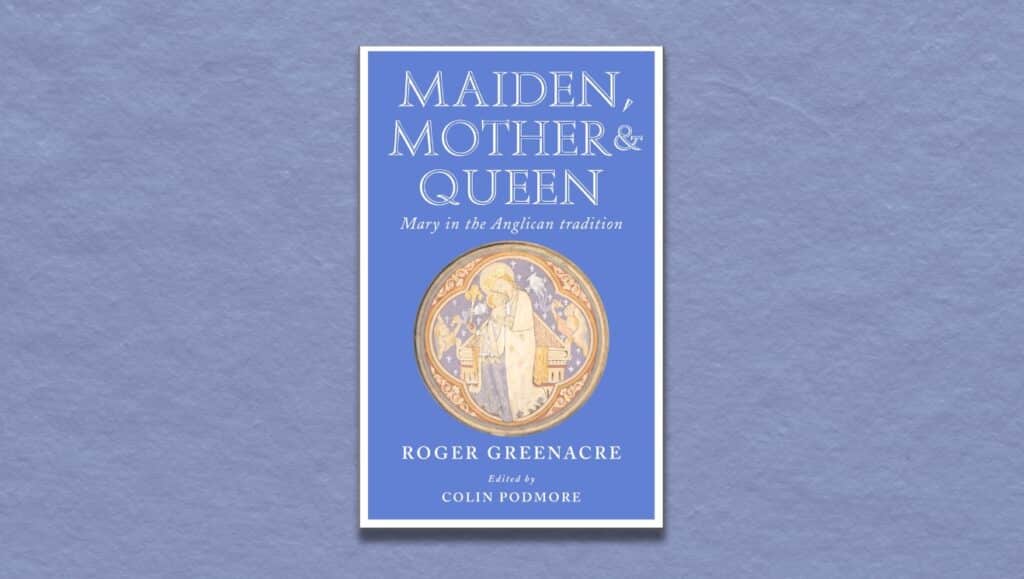
Book Review: Maiden, Mother and Queen by Roger Greenacre
Maiden, Mother, & Queen: Mary in the Anglican Tradition is an editorial compilation of works and homilies by the Rev. Canon Dr. Roger Greenacre (1931–2011), a leading Anglican ecumenist and liturgical scholar.
