

Why Do Anglicans Pray for the Dead?
For those new to the Anglican tradition, it may surprise you that the Book of Common Prayer, in all of its major editions, offers prayers for those who have died in the Christian faith. We don’t just pray for those who mourn; we pray for the departed themselves. We see these prayers for the dead in the Ministry to the Dying, Prayers for a Vigil, and the Burial of the Dead. The burial service includes many such prayers, including this one from the burial rite:
Almighty God, grant us, with all who have died in the hope of the resurrection, the fullness of life in your eternal and ever-lasting glory, and, with all your saints, to receive the crown of life promised to all who share in the victory of your Son Jesus Christ, who lives and reigns with you and the Holy Spirit, one God, for ever and ever. Amen.
The practice may seem strange if you grew up in a Christian tradition that did not pray for the departed. What do these prayers accomplish, after all? Aren’t they already with God? Anglicans do not believe in purgatory! Similarly, if you grew up within the Anglican tradition, you may have prayed for the dead your entire life without knowing why. In fact, the latter is more common in my experience than the former. So, why do we do it?

Sponsored
Why Pray for the Dead?
Why are there so many prayers for the departed in the Book of Common Prayer? As with most questions in theology, the answer is multifaceted. However, here are some basic reasons why Christians have always prayed for those who have gone to be with God.
You Already Pray for the Dead!
First and foremost, you already pray for the departed. Believe it or not, no matter which Christian Tradition you come from, you have prayed for the departed, and likely have done so your entire life. Think for a moment: what is the most common Christian prayer? “Our Father, who art in heaven…”—what does this prayer contain? Well, we pray for God’s name to be hallowed, for our daily bread, for our sins, and for God’s kingdom to come.
This last petition is significant. Why? Well, because the heralding of God’s kingdom affects the souls of the departed just as much as it affects you or me. The same is true when we pray “Maranatha” (1 Corinthians 16:22) or “Amen. Come, Lord Jesus!” (Revelation 22:20). The coming of our blessed Lord is a universal event that directly impacts the living and the dead alike.
The coming of our Lord is monumental for both the Saints in glory and the Saints on earth. You see, some prayers are so universal that they touch both the earthly and the departed. In fact, St. Paul seems to indicate that the coming of our Lord is more significant to those who have died than to the living when he writes:
For this we declare to you by a word from the Lord, that we who are alive, who are left until the coming of the Lord, will not precede those who have fallen asleep.
1 Thessalonians 4:15
This passage implies a certain deference to those who have already passed. So when we pray for the coming of that great day, we are, in some sense, praying for the departed more than the living, since they will precede us—they will experience the benefit of our prayers before we do. Whether we intend to or not, whenever we pray these things, we also pray directly for our departed brothers and sisters just as much as—if not more than—we pray for ourselves. When we pray for the departed from the Prayer Book, we are only making explicit what all Christians already pray implicitly.
The Dead Pray for Themselves
Secondly, the Faithful Departed pray for themselves. St. John records in his Revelation:
I saw under the altar the souls of those who had been slain for the word of God and for the witness they had borne. They cried out with a loud voice, “O Sovereign Lord, holy and true, how long before you will judge and avenge our blood on those who dwell on the earth?”
Revelation 6:9-10
The souls of the righteous martyrs cry out to Almighty God for vengeance. Holy Scripture reminds us in several places that Abel’s blood still speaks. He and all the faithful slain, “of whom the world was not worthy” (Hebrews 11:38), cry out to God and petition him from under his throne. So we see clearly that the Saints in glory are praying. These prayers, too, are not merely doxological praises sung to God; they are also prayers for themselves. If the Saints can pray for themselves, we can surely pray for them, too. We simply join them in the petitions they are already making on their own behalf.
Even St. Paul Prays for the Dead
A third minor point is that St. Paul appears to pray for the dead explicitly in his Second Epistle to St. Timothy. St. Paul prays for his friend Onesiphorus: “[M]ay the Lord grant him to find mercy from the Lord on that day!” (2 Timothy 1:18). Onesiphorus is likely dead in this passage, and St. Paul is commending his soul to Almighty God. This reading of the text may surprise some, but this is not a particularly “Catholic” reading, but quite at home within classical Protestantism. In fact, the great Presbyterian Theologian Philip Schaff writes confidently: “[T]his would, of course, be a prayer for the dead.”
This text does not explicitly tell us whether Onesiphorus is dead, but it seems to imply it. Taken together with the fact that, at the time, it was common to pray for the departed in the Synagogue, it becomes likely that St. Paul is doing precisely this: praying for his beloved friend who has gone to be with the Lord.
What Do Prayers for the Dead Do?
Hopefully, these brief explanations will demonstrate ample Biblical evidence for praying for the departed. It is not merely a sentimental practice to achieve a sense of catharsis amidst our grieving. It is grounded in beliefs Christians have held for a long time. That said, I also recognize that I haven’t explained what our prayers are accomplishing. The question I get most about our prayers is, “What do they do?”
I understand the sentiment and empathize. We are twenty-first-century people, and it is hard not to think about cause and effect. I’ll say that we have a deficient view of prayer. In our daily experiences, we most often find ourselves crying out to God by way of deficiency. I mean that when I sin, get hurt, or lack, I pray for myself. We are accustomed to praying when the need arises, not for much else. For us, progress in the Christian life is from sin to holiness. But what if this is not the only kind of progress there is? What if one can leap “from one degree of glory to another” (2 Corinthians 3:18).
An Imperfect Bliss
However, the Scriptures have told us of another kind of progress: a journey from good to good, from God to God. This was true of our first parents in the Garden of Eden. They were not crushed under the weight of sin, but they were imperfect. They still had much to accomplish and new heights to reach. After all, they had not fulfilled their divine mandate. For them, progress meant going from good to better and, someday, eating from the tree of life.
Similarly, we may think of the saints in bliss, but it is an imperfect bliss as they await the final consummation of the last Great Day. They are with the Lord, but they are not yet like the Lord. They are still awaiting the recreation of all things and the glory of their incorruptible bodies. While they await that day—while they journey—we may and ought to pray for them.
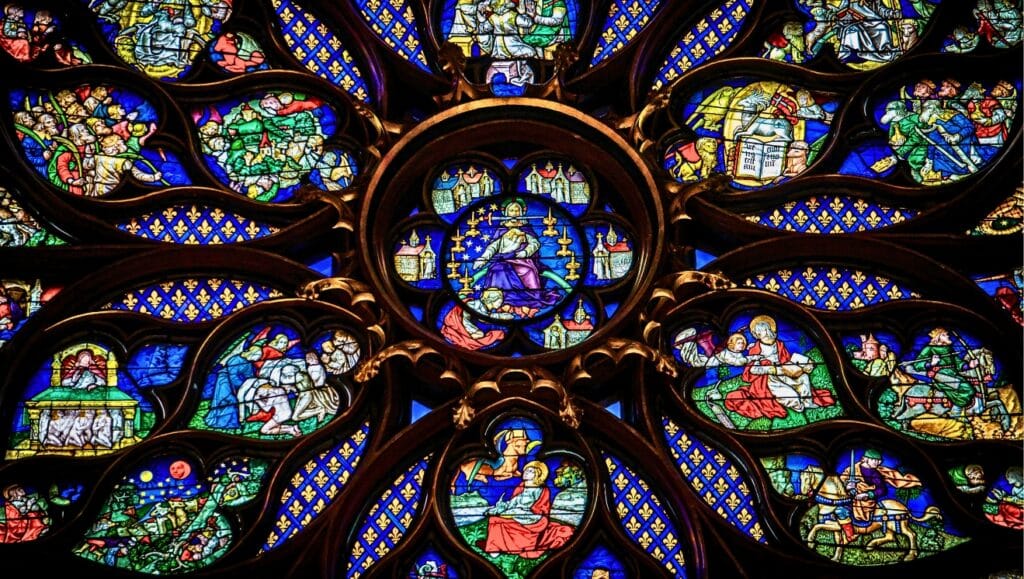
Photo by Jacob Amson on Unsplash. Digitally edited by Jacob Davis.

The Calendar of Saints: A Rookie Anglican Guide
Anglicans celebrate feast days for saints to honor exemplary Christian lives, rooted in biblical teachings on imitation. This practice evolved from early church commemorations of martyrs like Polycarp. While Reformation efforts simplified the calendar, Anglicans now recognize both historical and contemporary figures, maintaining focus on Christ as the central figure in worship.

The Burial of the Dead: A Rookie Anglican Guide to the Funeral Service
The day of a funeral begins with grief. The family of the deceased feels the sharp pain of loss.
