

The Anglican Ordination Process: A Rookie Anglican Guide
You’re thinking about ordained ministry in this or that Anglican community. If you need guidance on the question, check out this article. Maybe you’re already ordained in some other denomination. Maybe you’ve been serving in ministry for years, but as a layperson (that was my experience). What are some of the general guidelines and things to take into account as you begin to explore this possible future? The purpose of this article is to give you some general ideas.
As always, a caveat: there are lots of ways of being Anglican, so some of these points will apply to you more than others. In fact, you might find that your own experience goes against some of these points. Fair enough. All I can say is that this comes from 15 years of serving in Anglican ministry and interactions with Anglicans from over a dozen provinces. Here’s a basic walk-through of the ordination process.
Sponsored
Ordination Begins with the Parish Priest
The parish priest usually serves as a mediator between the parish (local congregation) and the bishop. Some parishioners know the bishop well and send him a text or email, but that is not usual. The priest probably interacts with the bishop and the diocesan government normally, whether that means serving on some committee, submitting reports, or planning episcopal visits.
Many bishops who receive emails or calls about ordination will instinctively refer the inquirer to their priest. This makes sense: most ordained people will function as pastors of some sort. If your Anglican pastor doesn’t know you and can’t recommend you to the bishop, who is the pastor of the diocese, that’s not a good place to start. The bottom line is that if you’re curious about the ordination process, find a local Anglican pastor to speak with!
Ask Why Are You Called to Anglican Ordination
I can’t tell you how many times I was asked, “But why are you sensing a call to ordained ministry?” I already had a Ph.D. in divinity and a decade of full-time ministry, yet I was asked this many times. It became exasperating, but in retrospect, I get it.
There are many bad reasons to pursue ordination: power, control, esteem, reputation, thinking that this will get you closer to God (it both will and won’t—a different article there), etc. It’s worth considering: what will you be able to do as an ordained minister that you can’t do as a lay minister? You love teaching, evangelizing, and counseling. No real need to be ordained for those. Many dioceses have permanent diaconates, so maybe you need to consider whether you feel called to the diaconate rather than the priesthood. I personally felt called to the episcopate from the very beginning. (That’s a joke.)
Be Patient and Humble in the Ordination Process
Seriously, you might have a bishop who really wants to ordain you, but there are often constraints and church law that cannot be rushed. I had to complete an unpaid internship at a homeless shelter and half a year of Clinical Pastoral Education (CPE) at a children’s hospital. Again, all of that after ten years of ministry and with a Ph.D. in Divinity.
It seemed a little humiliating, to be honest. But in the words of T.S. Eliot: “humility is endless.” Or Mother Theresa: “The only way to learn humility is by being humiliated.” In retrospect, those experiences at the Children’s Hospital—helping a little child to say her first prayer, of being with the mother of a youth who had tried to commit suicide and would never be conscious again—I wouldn’t change them for anything.
Be patient. Be humble. You might already have a fantastic M.Div., but you might be asked to take a few (or many) classes in Anglican studies. Are you being asked to take some online courses in something you’re sure you already know? Are you being put under the supervision of someone who, you think, has less experience than you? In all honesty, if you can’t deal with humiliation, you shouldn’t be a priest, and even if you are ordained, you won’t be a good one. That’s me being totally honest.
Meet The Ordinational Committees
While all Anglican dioceses have their own cultures and procedures, you will likely need to meet with or be interviewed by at least one commission or committee. People will ask you questions you might find odd, pointless, or invasive. Guess what? These are the same people who will be your parishioners someday—or people like them.
Work with these groups. Learn from them; learn about the culture of their parish or mission and that of the diocese. Are there particular values, words, or topics that resurface? Whether or not ordination occurs, this can better inform you about your regional church and help you become a better servant and stronger voice in that community.
The Diocese is the Center of Ordination
I once heard a senior cleric say that most Anglicans live like Congregationalists. His point, I think, was that the day-to-day functioning of your parish has little to do with the diocese. That is often true, but discernment is exposure to the undergirding, hidden mechanics of diocesan life. That’s a good thing! If you later receive ordination, you will become a cog in that machinery. Some priests play almost no role in the life of the diocese beyond their congregation, while others are enormously influential. However, the truth is that once you are ordained, you are part and parcel of the diocese.
That means more than might appear obvious: your primary home is the diocese, not the parish or the province. It also means that, while your diocese might belong to a province (ACNA, TEC, whatever), if your diocese leaves, you are, by default, and unless you clearly decide otherwise, leaving as well. That doesn’t happen often, but it does happen.
Your Ordination—Validity and Boundaries
It also means that while your ordination is acknowledged as valid by (probably) the Anglican Communion and/or the Global Anglican Future Conference (GAFCON), you cannot technically operate as a priest outside of your diocese without first seeking permission from the bishop ordinary of the diocese. If you move to another city in another diocese, your former bishop and your (potential) new bishop will need to work in concert to permit you to officiate in the new city or town.
That’s a lot of technicality. Some of it gets ignored today, but it is what it is. It represents an aspiration to a wholeness/holiness (same root). But in the end, the diocese is the new home of the one ordained—not the parish, the province, or the global communion. Primates and archbishops are nothing more than bishops with certain administrative prerogatives. The Bible recognizes bishops as pastors of the local church or diocese.
Have a Clear Ordination Plan
Enough technical canonical theory! As you progress, someone will ask you, “What do you want to do if you are ordained?” Perhaps you genuinely feel you will place yourself completely at your bishop’s mercy because you are stepping out in faith. That sort of faith may well be desirable, but some bishops and committees are also looking for pragmatism—the art of the real.
Prepare a statement along the following lines: “I would like to continue my work with [whatever, which provides a salary] while assisting with the ministry of [whatever], strengthening and focusing on our work among [whomever].” And then you can add, “But I’m also open to considering any other ministry needs.” Only add that if it’s sincere, of course.
Learn The Vocabulary
A minor point, but worth mentioning. We Anglicans have all sorts of fancy words we like to use. (“Where in the name of the Holy Martyrs of Cordova are the purificators? Get me the sub-dean and sacristan!”) Nevertheless, in all solemnity, we have a whole vocabulary for this topic of ordination. It’s not used in the same way everywhere, but make sure you have an idea of the following words’ definitions. Please reference the Anglican Compass glossary.
Have Your Ordination Papers in Order
Yes, it’s like deboarding the plane and going through passport and customs control. Do this earlier rather than later.
- Have you been baptized? Have a certificate.
- Confirmed? Likewise.
- Ordained in some denomination or other? Same.
The extent to which your diocese will acknowledge these things and to what extent anyone will even care about them varies from diocese to diocese and committee to committee. I can tell you that it demonstrates transparency and responsibility.
In our ministry, I’ve had to track down a baptismal certificate from that Lutheran church in Montana where I was baptized. Likewise, Sharon had to request one from her old Christian and Missionary Alliance (CMA) church in Hawaii. That was a legitimate request from a cleric doing his job. Replacing such papers can take time, so you’d better get started sooner rather than later. The same goes for academic transcripts.
Why are You Leaving Your Current Denomination?
If this one doesn’t apply to you, skip it. However, read it because someday you’ll talk with someone to whom it does apply. This is not about being political. Why are you leaving your denomination for Anglicanism? Are you really attracted to a fuller and more profound vision of ministry within the messy, beautiful world of Anglican Christianity? Why? The concern is the same as that of people who left a neighboring congregation to join yours.
- Is your motive sincere and born out of a genuine call to ministry within the catholic and apostolic church?
- Or were you frustrated with your previous supervisor or boss?
- Did you not work well as part of a team?
- Whatever the problems or issues were, will they resurface in Anglican ministry?
Assist Your Bishop in the Ordination Process
Ultimately, your bishop is the priest responsible for supervising the diocese. Bishops have a lot on their minds. Bishops—like any senior management, I imagine—love to have competent, trustworthy people assisting them and working under them. Do you know your bishop’s vision for his diocese? There’s a good chance he talked about it at a recent synod, council, diocesan conference, or newsletter. Get to know it. How can you be a part of it? How can you help your head pastor fulfill that sense of calling? Get to know his vision, learn how you can be a part of it, and tell him.
Conclusion
There will be committees and commissions, paperwork, certificates, and transcripts. Things will often start with the parish priest. Be prepared for certain questions. Have a plan to propose. Be patient and humble. Commend the whole matter to God’s merciful hands and pray for all involved. Ultimately, you must believe that this is a real communal discernment of whether God has called you to ministry in holy orders.
The saying is trustworthy: If anyone aspires to the office of overseer, he desires a noble task.
1 Timothy 3:1
Image: Ordination of a Deacon woodcut ca. 1520. Courtesy of Wikimedia Commons and Project Gutenberg. Digitally edited by Jacob Davis.

The Lambeth Conference: A Rookie Anglican Guide
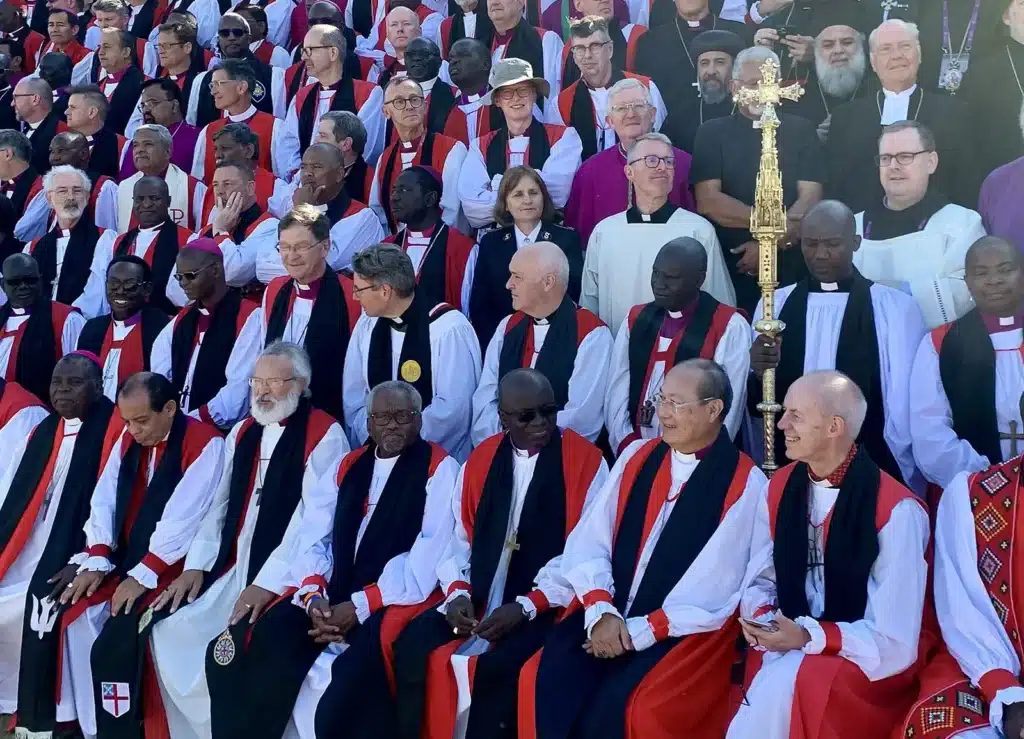
Every ten years, Anglican bishops from around the globe gather in England for the Lambeth Conference. The conference takes its name from Lambeth Palace, the London residence of the Archbishop of Canterbury, which housed the first conference of 76 Bishops in 1867. Since 1978 the conference has been held in Canterbury, but retains its original…

J.I. Packer: A Rookie Anglican Guide
J.I. Packer became an international figure through scores of pamphlets and books, especially his 1973 bestseller, Knowing God. Packer’s institutional engagement is less famous than his books but arguably even more influential.

