
Confirmation: A Rookie Anglican Guide
What is Confirmation?
Confirmation is a church practice that falls into the category of what the Anglican Catechism calls “rites and institutions commonly called sacraments.” Along with Confirmation, there are four others like it: Absolution (confessing one’s sins and receiving forgiveness in the presence of a priest), Ordination, Marriage, and Anointing the Sick.
These practices, or rites, are deeply charged “sites” of God’s grace. They are “commonly called sacraments” (and for some Anglicans, they are considered sacraments) because they are visible signs that confer an invisible grace. However, we distinguish them from the two primary sacraments of Baptism and Eucharist because those two are “commanded by Christ as necessary for salvation.”

Sponsored
While many Protestants shy away from calling Confirmation a sacrament in the strict sense, the Church’s witness throughout the ages, especially in the Anglican wing, has upheld it as a vital means through which God mediates grace to us.
Where Did Confirmation Originate?
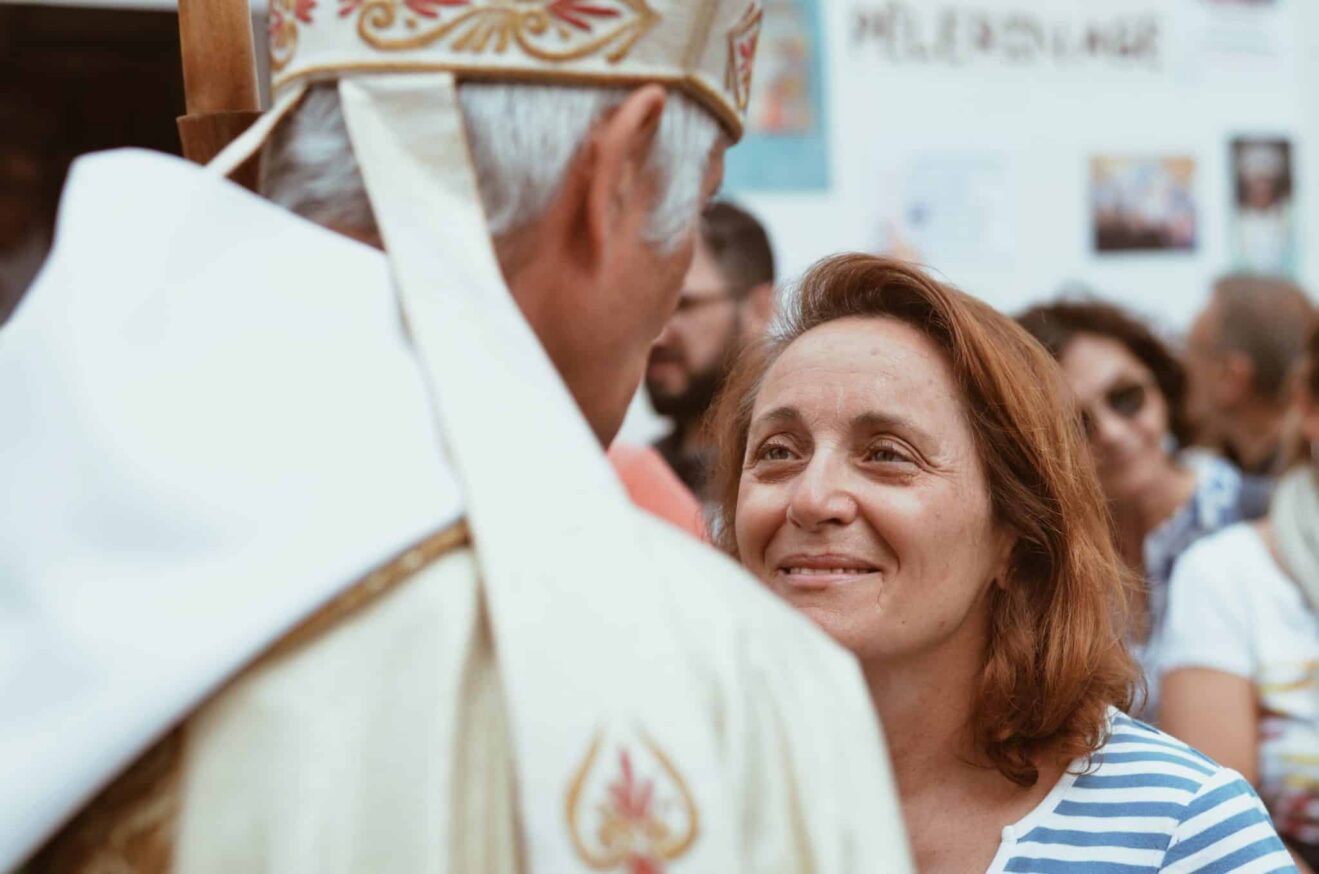
Confirmation arose from the early Church’s reflection on Scripture concerning how one became a Christian. It first describes what happened when a bishop would lay hands upon, pray for, and anoint the forehead of the newly baptized with oil, signifying the gift of the Holy Spirit. The newly baptized/confirmed would then proceed to receive their first Eucharist.
Over time, Western churches gradually separated Confirmation from Baptism, unlike the Eastern Orthodox churches, which still promptly confirm infants after Baptism. In Anglican churches, the common practice involved infant baptism, followed by extensive instruction (catechesis) during adolescence, which prepared individuals for Confirmation. Once again, Confirmation was a prerequisite for receiving Communion. It’s also worth noting the distinctiveness of Confirmation; priests could perform baptisms, while Confirmation typically remained within the bishops’ domain.
Puzzling Over Confirmation Today
In recent history, the Church has ignored questions beyond Confirmation. A few concerns:
- The Church connected Confirmation to Baptism very early. Does that mean that if you’re not confirmed, Baptism is insufficient?
- The Church has often linked Confirmation to the Holy Spirit. Is the Spirit missing in Baptism?
- What if there’s no bishop around to offer Confirmation (as there wasn’t in America for the first 200 years)?
- Today, Confirmation is no longer required to receive Communion. If it’s not necessary for salvation and not needed for receiving Communion, why bother at all?
First, we would probably do well to begin with different questions. Maybe the question isn’t merely about salvation—am I “in” or “out”? Why not ask: “What more does God have in store for us? What kind of life in Christ is God calling us to enter into more deeply?” If we ask these sorts of questions, we can better see what Confirmation is and why we should incorporate it more into the Church’s life.
Clarifying Confusion: Confirmation as Maturity and Mission
At its most basic, Confirmation is the rite in which, after a believer is baptized and makes a mature commitment to the faith, they receive an increased gift of the Holy Spirit through the bishop’s prayer, the laying on of hands, and anointing. Once again, the Catechism puts it beautifully. When asked, “What grace does God give you in confirmation?” the response is, “In confirmation, God strengthens the work of the Holy Spirit in me for his daily increase in my Christian life and ministry.” To clarify some of the confusion around Confirmation, I want to rework some of the questions about it and suggest that we think of Confirmation in terms of two key emphases: maturity and mission.
Growing Up: the Sacrament of Maturity
First, Confirmation is the sacrament of maturity, representing a deepening or strengthening of the Christian life, and connects closely with Baptism. Whereas Baptism highlights one’s birth into the body of Christ, Confirmation stresses growth. In both Baptism and Confirmation, the Holy Spirit is present; it’s a rule of Trinitarian theology that wherever there’s one person of the Trinity, all three are present. However, in Baptism, the Spirit washes away our sin, cleanses our guilt, and regenerates us into new life. In Confirmation, on the other hand, the Spirit deepens and strengthens that life so that we grow up into more mature Christians.
The great medieval theologian Peter Lombard nicely described the Spirit’s presence in Baptism and Confirmation:
The virtue … of the sacrament [of Confirmation] is the gift of the Holy Spirit for strength, who is given in baptism for remission.
Peter Lombard, The Sentences, Book IV, Distinction 7
In other words, the Holy Spirit’s forgiving gift in Baptism is only the beginning of a work of Confirmation that is fortifying and enriching.
Growing Out: the Sacrament of Mission
Second, Confirmation is the sacrament of mission. By this, I mean that Confirmation “marks” a person for undertaking the vocation Christ called us to do. In this regard, Confirmation is sort of like Ordination: it marks you out for a specific calling. But unlike Ordination, the Church confirms both lay people and priests. Why? It is because every Christian’s vocation is to proclaim the Gospel and live a holy life.
Hence, this is also why Confirmation links to the bishop’s presence. As Ordination into the priesthood requires the bishop’s presence, so too, in Confirmation, the bishop’s presence signifies that the confirmand receives the charge to carry on the apostolic mission. One area where thinking about Confirmation has gone wrong is to see it as a kind of graduation from Christian education and formation rather than a commencement. Too often, we think that once a person is confirmed, the journey ends; I was baptized, catechized, and confirmed. What else is there? Well, quite simply: everything! Far from being the end of the road, Confirmation marks a new beginning. It is a new, more profound sense of vocation. Confirmation marks you out for a life on mission.
Is Confirmation an Initiation, or is Baptism?
Some Anglicans have debated whether Baptism is a “complete sacramental initiation.” The logic is: if Baptism does the trick, why bother with Confirmation? What a slippery question. If someone means by this that Baptism is somehow insufficient for salvation, then no: Baptism is sufficient; Baptism makes Christians. Full stop!
Yet if by “initiation,” one means that we are always being initiated deeper into life with God, then yes, we can say that Baptism is “incomplete. All of life is incomplete until we see God face to face. Confirmation, then, is a sacramental practice uniquely related to the Holy Spirit’s ministry of maturity and strengthening—literally, with–firming, being made firm with (Latin, con-)—the power of the Spirit. In this, we seek to live out what St. Paul writes in Ephesians about growing up into the full measure of Christ (Eph. 4:13).
Why Should I Pursue Confirmation?
If Confirmation is like an ordination for a life of Christian mission, where’s the mission field? Mission doesn’t just happen overseas. It happens everywhere: in our neighborhoods, homes, and the ordinary places of our everyday existence. Mission is right where we are, right now.
To reinvigorate and renew the practice of Confirmation is one of the most critical tasks for the Church today, because renewing Confirmation means renewing the Church’s mission. It means well-equipped, well-trained missionaries going out into the mission field of life, proclaiming the Gospel in all they do. It means further equipping all the saints for the work of God’s kingdom. And, finally, it means a rising generation of Christians who have dedicated their lives to the glory of God in every area of life.
And he gave the apostles, the prophets, the evangelists, the shepherds and teachers, to equip the saints for the work of ministry, for building up the body of Christ, until we all attain to the unity of the faith and of the knowledge of the Son of God, to mature manhood, to the measure of the stature of the fullness of Christ. . .
Ephesians 4:11-13
Photo by Caroline Hernandez on Unsplash
Published on

The Anglican Ordination Process: A Rookie Anglican Guide
You’re thinking about ordained ministry in this or that Anglican community. If you need guidance on the question, check out this article. Maybe you’re already ordained in some other denomination. Maybe you’ve been serving in ministry for years, but as a layperson (that was my experience). What are some of the general guidelines and things…

Anglican Vestments: A Rookie Anglican Guide
You walk into an Anglican church and see many people wearing a wide array of odd clothing. You notice ministers wearing white robes with colorful scarf-like items around their necks, some vertical and some diagonal. If the parish has a verger (typically the person who appears to know what everyone is supposed to do), they…
